The Joint Counter-Terrorist Centre will play a significant role in Captain America: Civil War and at the head of the JCTC is Everett Ross, played by Martin Freeman, according to Empire Magazine.
In the comics Everett Ross worked for the U.S. State Department; his job was to escort foreign diplomats on American soil.
The article also states that Captain America will return to Germany. Co-director Joe Russo is promising that the return to Germany will bring Steve Rogers “full circle”, sending him back to where it all began in a way that will no doubt be emotionally challenging for Steve.
Captain America: Civil War is directed by Anthony & Joe Russo from a screenplay by Christopher Markus & Stephen McFeely, Captain America: Civil War picks up where Avengers: Age of Ultron left off, as Steve Rogers (Chris Evans) leads the new team of Avengers in their continued efforts to safeguard humanity. After another international incident involving the Avengers results in collateral damage, political pressure mounts to install a system of accountability and a governing body to determine when to enlist the services of the team. The new status quo fractures the Avengers while they try to protect the world from a new and nefarious villain.
The film stars Chris Evans, Robert Downey Jr., Scarlett Johansson, Sebastian Stan, Anthony Mackie, Paul Bettany, Jeremy Renner, Don Cheadle, Elizabeth Olsen, Paul Rudd, Chadwick Boseman, Emily VanCamp, Daniel Brühl, Frank Grillo, William Hurt, and Martin Freeman.
Captain America: Civil War is set for release on May 6.
As snowstorm Jonas hit the East Coast of the United States this past January, dropping over 30 inches of snow in some areas, the theory of “last snow ever” does not sound so bad. (Especially for those of us who lost three days t that record-breaking storm.) But in the world of Joe Harris and Martin Morazzo’s Snowfall #1 it may be exactly that.
It is the year 2045. The last snow fall was nearly 10 years ago. Weather is limited, monitored and controlled. It is no mystery we have been destroying the planet, but it is now up to us to correct our mistakes. The private sector and the government have come together to work on the growing and continuing climate issue: To bring back the snow. But, to many, they are moving too slow. And these frustrations may be leading some to take the weather into their own hands.
Joe Harris (X-Files: Season 11) plays on our basic fears with this politically directed statement towards the environment. Harris uses a mix of fact and hypothetical’s to build a future that may very well be Earth’s next step. With the technical language, you cannot help but read further into why Snowfall’s world has so drastically changed. Though the likelihood of such an event, including enhanced human-cybernetics, in our reality is unrealistically immediate, the possibility of the eventualities is humbling.
Only tip to the read: Stay focused! Snow Fall is by no means difficult to comprehend. But the back and forth of the book can turn you around if not properly paying attention. The concept of the weather-worn planet is indeed deep and easily recognizable. Yet, if straying too far off into personal quandary or flipping a few pages backwards or forwards to make sure you read something accurately, you may lose your place. Take your time and read this book. Enjoy it!
Martin Morazzo’s (Great Pacific) grizzled art is a mix between Frank Quitely’s (We3) crease and muscular line-work and Jason Howard’s (Trees) circular definition. With the playful colors of Kelly Fitzpatrick (Bitch Planet), the story reads like a politically yet emotionally driven play. It is mesmerizing. There are even a few times when the art over-powers the storytelling. With the attention demanding language, the art can distract from the momentum.
There is a beautiful yet telling tale behind Image Comic’sSnowfall #1. It may sometimes be difficult to stay directly focused on the story due to the deep context and drifting storyline, but it is a fascinating topic and a realistic possibility. It can be politically directed but is an immersive story with wonderful art. Definitely is worth the pick-up.
Make sure to stop by your local comics retailer and pick up Snowfall #1.
During tonight’s Wonderful World of Disney: Disneyland 60 special, a fantastic teaser trailer for Pete’s Dragon debuted. The teaser trailer gave us our first look at Elliot the dragon in the live-action/CGI remake of the 1977 Disney film. Check out the trailer!
https://www.youtube.com/watch?v=PSfytd16wmA
Here’s the synopsis:
A reimagining of Disney’s cherished family film, “Pete’s Dragon” is the adventure of an orphaned boy named Pete and his best friend Elliott, who just so happens to be a dragon. “Pete’s Dragon” stars Bryce Dallas Howard (“Jurassic World”), Oakes Fegley (“This is Where I Leave You”), Wes Bentley (“The Hunger Games”), Karl Urban (“Star Trek”), Oona Laurence (“Southpaw”) and Oscar® winner Robert Redford (“Captain America: The Winter Soldier”). The film, which is directed by David Lowery (“Ain’t Them Bodies Saints”), is written by Lowery & Toby Halbrooks based on a story by Seton I. Miller and S.S. Field and produced by Jim Whitaker, p.g.a. (“The Finest Hours,” “Friday Night Lights”), with Barrie M. Osborne (“The Lord of the Rings: The Fellowship of the Ring,” “The Great Gatsby”) serving as executive producer.
For years, old wood carver Mr. Meacham (Robert Redford) has delighted local children with his tales of the fierce dragon that resides deep in the woods of the Pacific Northwest. To his daughter, Grace (Bryce Dallas Howard), who works as a forest ranger, these stories are little more than tall tales…until she meets Pete (Oakes Fegley). Pete is a mysterious 10-year-old with no family and no home who claims to live in the woods with a giant, green dragon named Elliott. And from Pete’s descriptions, Elliott seems remarkably similar to the dragon from Mr. Meacham’s stories. With the help of Natalie (Oona Laurence), an 11-year-old girl whose father Jack (Wes Bentley) owns the local lumber mill, Grace sets out to determine where Pete came from, where he belongs, and the truth about this dragon. Disney’s “Pete’s Dragon” opens in U.S. theaters on August 12, 2016.
This episode of American Crime Story establishes how the complicated issue of race became of the centerpiece of O.J. Simpson’s trial. Marcia Clark put this best when suggesting the jury at Simpson’s trial should consist of, “rich, middle-aged white men.” These are Simpson’s peers, and nothing says it better than his Dream Team of lawyers. Each of them has a different set of motivations. Shapiro, for example, knows that his client is probably guilty. Shapiro of course doesn’t care. Seeing Shapiro react to what people say, especially when he talks to John Cochran, is astounding. John Travolta does an excellent job at conveying these subtle moments.
Robert Kardashian has a bit of a spotlight in this episode, and he’s just as clueless, if not outright in denial, about Simpson’s guilt. His wife knows that Simpson killed Nichole, but that doesn’t matter to Kardashian. It plays into the whole concept of women not being believed. A man can beat women like Jian Gomeshi, a man can rape women like Bill Cosby, and a man can even kill his ex-wife like O.J. Simpson, but because they’re celebrities it can’t be true. All the evidence is there, but no one will believe these women. It’s one of the longest-running double standards in our society.
This is why Marcia Clark stands by her case, and is determined to believe a dead woman’s cries for help. Clark read the initial transcripts for Nichole’s 911 calls. She doesn’t just see Nichole as a single mother brutally murdered. Clark also sees a woman who couldn’t be believed. Here is where O.J.’s privilege comes back into play, because he’s treated with the same privilege as Kardashian would have. Simpson is miffed that his country club buddies won’t visit him in jail. He’s on trial for murder, and that’s his biggest concern?
Marcia Clark is surrounded by white privilege in her male coworkers. Often it seems like Clark’s male coworkers dismiss her passion for melodrama. But Clark didn’t get where she is without serious tenacity, and she knows that Simpson’s Dream Team has serious pull. She sees the pitfalls where her colleagues don’t. Clark immediately finds an ally in Christopher Darden. Darden was the first to point out Simpson’s white privilege-like social status in Episode 1. Darden also sees the white privilege advantage in Shapiro, Kardshian, and Bailey. The three rich white men know how to play the game with racial politics, and that’s their advantage from being on the outside looking in.
If you were at the BATMAN: THE DARK KNIGHT RETURNS 30th Anniversary book signing yesterday in Los Angeles, you were in for a treat of epic proportion. Stan Lee stopped by the Barnes and Noble to surprise Frank Miller at the soldout signing and discussion.
“Glad I finally got to convert Stan Lee,” said Miller on social media.
Eric Stephenson, Publisher at Image Comics, didn’t hold back at ComicsPRO 2016. He delivered a speech that rivals Jerry Maguire‘s Manifesto.
Stephenson urged publishers to produce less comic books, pushed creators to be more creative, and pleaded with retailers to not inflate sales by ordering the 1 in 100 variants.
The following is a transcript of the speech given by Eric Stephenson, Publisher at Image Comics, on Friday, February 19th at 3:10 p.m. at the 10th Annual ComicsPRO Membership Meeting in Portland, Oregon to the comics retailer community. – Image Comics
I’d like to talk about the future, but first, we’re going to do some time travel, back to a time when there was no Internet, no Twitter, no Facebook, no Instagram. A time when there were no comic book stores.
No one here was in this business in the 1950s, but by all accounts, it was a bleak time for comics. Our industry was barely two decades old, yet it was on the brink of collapse.
Political posturing had rendered one of comics’ most vital creative forces – EC Comics – all but mute. Crime and horror comics had been neutered by the Comics Code and for all intents and purposes were dead – shot by their own gun. Comics bowed to outside pressure and erected a self-regulating ratings system that all but outlawed any type of content that might appeal to older readers. Comics were for kids, after all, but even superheroes, so popular during the Second World War, were a faltering concern.
Martin Goodman’s comic book imprint, then known as Atlas, was making due selling monster comics, but by the early ’60s, things were looking grim. You have to look into the darkness to see the light, though, and it was in those dark times that comics found renewed hope.
Maybe something was in the air back then, because the same time that gave us The Beatles and Bob Dylan gave us what we now know as the Marvel Universe.
The Fantastic Four. Spider-Man. The Incredible Hulk. The Avengers.
Stan Lee, Jack Kirby, Steve Ditko, and all the amazing artists that worked alongside them inspired a generation of readers with their work and in doing so, turned Marvel Comics into a towering monolith amid a teetering industry. DC Comics, already well-known for Superman, Batman, and the Justice League was reinvigorated as well, and without much exaggeration, it can be said that superheroes saved comics.
But fast forward to the 1970s.
Comics boomed for a decade, but as the ‘60s receded into memory, so too did the excitement that had grown around comics. Jack Kirby left Marvel for DC. Superheroes began to struggle against the constraints of the Comics Code. Underground comics and black and white magazines like National Lampoon and Warren’s Creepy, Eerie, and Vampirella highlighted the restlessness of a medium eager to grow.
But the newsstands that had long served as comics’ primary sales outlet began their long goodbye, with inexpensively priced comic books first to go as every and all attempt was made to increase profits whilst consolidating space.
Writers and artists entering the industry then were routinely assured the business was on its last legs. Comics were doomed.
All comics were returnable then, and returned they were, in droves. Often, comics didn’t even make it out of the warehouse, resulting in regional scarcity that heightened the value of comics on the growing collector’s market.
In the interest of time, I’m going to gloss over some facts here, but it was at that point Phil Seuling began laying the foundation for the Direct Market.
It didn’t happen overnight. It took years for small used bookstores and head shops to gradually evolve into bonafide comic book stores, but by the end of the ‘70s, there was a system in place and the market as we know it today was in its infancy.
Comics prospered as a result, and it wasn’t just the usual suspects like Marvel and DC.
The undergrounds matured into independent comics, and we got Cerebus and Elfquest.
We got Love & Rockets, American Flagg, and Nexus. First Comics. Pacific Comics. Eclipse. Kitchen Sink. That old master, Will Eisner, unleashed a steady stream of graphic novels that challenged the perception of what comics could and should be, and from the late ‘70s through the 1980s and beyond, comics exploded with creativity.
But fast forward again, this time to the mid-‘90s.
Comics had gained a bit of respect at this point.
Thanks to the talents of Alan Moore, Frank Miller, Art Spiegelman, Garth Ennis, the Hernandez Brothers, and Neil Gaiman, the world was starting to pay attention. Comics weren’t just kids stuff.
But there were problems, too. Black and white indie comics boomed – then crashed – and in doing so, underscored a penchant for short-sighted greed that has ebbed and flowed in our marketplace for decades.
And it definitely flowed in the 1990s.
Just as it seemed that comics were bound for the kind of cultural legitimacy that eluded the art form when mature content was foolishly abandoned with the sudden death of EC Comics in the ‘50s, the market gave in to its most craven impulses. The unprecedented level of creativity that ushered in one of comics’ most prosperous periods gave way to gimmicks.
There were more comic book stores than ever, and there were more comics, too.
Too many comics, with too many covers.
Variant covers. Foil covers. Hologram covers. Embossed covers. Die-cut covers. Gatefold covers. Glow in the dark covers.
Comics were polybagged, comics were commoditized, and comics were hoarded as speculation ran rampant.
Comics were shipped late, and sometimes not at all, as publishers of all breeds galloped ever onward, with little regard for their readers and next to no respect for retailers.
Heroes died, and heroes were reborn. Titles were canceled, and titles were relaunched and renumbered.
The market expanded.
And then it collapsed.
Stores went out of business.
A textbook example of both short-term thinking and extreme hubris resulted in an almost lethal blow to the Direct Market’s distribution system, effectively leaving only Diamond Comics Distributors standing.
More stores went under, with the number of Direct Market retail accounts plummeting to a small fraction of a total that once topped 10,000 – losses that, to date, are far from being recovered.
Marvel filed for bankruptcy.
That was less than 20 years ago, but let’s fast forward again, to the earliest part of this century.
Thanks to Joe Quesada, and Bill Jemas, Marvel Comics was on its feet again. Thanks to the careful oversight of Paul Levitz and Bob Wayne, DC tied together past and present successes alike to build an impressive and sustainable backlist program that in many ways remains the industry standard.
And thanks to the creative vision of as varied a bunch as Craig Thompson, Marjane Satrapi, Warren Ellis, Mark Millar, Brian Michael Bendis, Grant Morrison, Brian Azzarello, Daniel Clowes, Chris Ware, and once again, Alan Moore, Neil Gaiman, and Frank Miller, as well as a growing influx of Manga titles too numerous to list, the comics industry found its spine.
For the first time since the days of the newsstands, it embraced a broad, general audience in a true sense, and comics flourished again.
Things didn’t get better immediately, but the market stabilized, and then the market began to grow. Better still, it began to grow in new and different ways.
New voices sounded the call for new audiences:
Jeff Smith. Brian K. Vaughan. Gail Simone. Jill Thompson. Bryan Lee O’Malley. Alison Bechdel. Robert Kirkman. Jeff Kinney.
As the types of content comics offered expanded, the entire appearance of the market changed.
And here we are today.
Where once comics were summarily dismissed as light entertainment for adolescent boys, there are now comics for everyone by everyone.
In many ways, there has never been a better time to read comics, but as the story goes, “It was the best of times, it was the worst of times.”
A colleague of mine recently said, “I’ve literally never liked working in comics less.”
He is not alone.
Over the past few months, and increasingly since the beginning of this year, I have heard similar comments from all corners of this industry. Writers. Artists. Retailers. People are worried about the future.
Again.
Not because we’re floundering creatively.
You can’t lament the creative health of a marketplace filled with talent like Jillian & Mariko Tamaki, Raina Telgemeier, Jeff Lemire, Nate Powell, Kieron Gillen & Jamie McKelvie, Jason Aaron, Marjorie Liu, Julia Wertz, Ron Wimberly, Matt Fraction, Ed Piskor, Fiona Staples, Kelly Sue DeConnick, Scott Snyder, Rick Remender, Erika Moen, Ming Doyle, and the many, many, many other creators who have made modern comics the vibrant experience it is today.
No, people are worried because we are once again falling victim to our worst instincts. We are letting short-term thinking dictate our future plans. We are letting greed guide our way.
Here’s another dog-eared quote:
“Those who fail to learn from history are doomed to repeat it.”
We’ve outlived the Comics Code, we’ve outlived the newsstands, we’ve grown up – but for all the lessons we’ve learned along the way, we somehow still can’t bring ourselves to think responsibly about the future.
We worry too much about what we don’t have instead of focusing on what we’ve got, and we keep marketing the fear of missing out as excitement.
So we’ve gone back to gimmicks, to variant covers and relaunches and reboots and more of the same old stunts disguised as events, when really all our readers want are good stories.
We’re giving them great jumping on points over and over again, but it’s becoming so commonplace our audience instead sees them as opportunities to cut and run. We are misinterpreting sales spikes for long-term success, and worst of all, we are spending so much time looking at how to keep going that we’ve lost sight of where we were heading in the first place.
And when I say “we,” I speak not just of publishers, or of retailers, but creators as well.
We are, sadly, all at fault.
But happily, we are all in this together.
So here’s the good news:
It doesn’t have to be this way.
We come to ComicsPRO each year, and to Diamond’s Retailer Summits, to exchange ideas about how to make the market better. Publishers come here for feedback from their retailer partners, and retailers attend to learn from one another. More recently, creators have been welcomed to engage in the discussion, as well they should – they’re as much a part of our industry’s infrastructure as anyone else, arguably the most vital part.
We all want advice on how to make the comics industry the best it can possibly be, so I hope what I have to say next is taken in that spirit.
We need to stop.
If you – if any of us – are putting short-term needs ahead of long-term thinking: Stop.
Stop stunting your own growth by doing things the way they’ve always been done.
Stop being so beholden to the past – to past victories, past mistakes.
Stop revelling in nostalgia for a time long gone by. Creatively, the golden age of comics is now – let’s save our nostalgia for today.
If you are a retailer ordering more copies of a comic than you can sell simply to qualify for a variant incentive: Stop.
Variants don’t build a lasting readership on the books you’re trying to sell. At best, they pay short-term dividends; at worst, they deprive fans of something that is limited in nature. All comics should be for everyone. Not just collectors. Not just whoever has the most cash on hand.
By the same token, if you are a publisher trying to force your comics into the marketplace with exclusive variants retailers can only order by irresponsibly increasing their orders: Stop.
You’re getting a short-term sales boost at best, and you don’t benefit from stacks of unsold books cluttering up the stands or being shoved into dollar boxes.
And really, what do any of us gain by spamming LootCrate customers with copies of a book that will be selling a fraction of its first issue total when #2 ships, other than market share? We’ve all played that game, and without a clear marketing plan for how to convert those blind box copies to real sales, to real readers, it gets us nowhere. Stop.
Likewise, if you are a publisher putting out too many comics: Stop.
It’s a crowded marketplace.
It’s getting more crowded by the week. We’ve all put out books we felt deserved a better response than they received, good books — great books, even — and they are getting lost. I’ve seen it. You’ve seen it. None of us are immune to this, so just stop.
And start giving more consideration to what the market really needs. Look at what’s out there, what niche is already being filled.
I’ve been turning down zombie pitches for years, but now, I’m turning down sci-fi pitches. I’m turning down horror pitches. Crime pitches. Anything we already have in abundance. Unless there’s something truly remarkable about those kinds of comics, the market is filled with them already. There are other seams to work. Now is the time to start digging deeper.
If you are a creator – a writer, an artist, both – the legends of yesteryear have done their work. For decades now, we’ve all been standing on the shoulders of giants. It’s time to stop. Let them have their rest. Now is the time to create new characters, to explore new worlds, to tell new stories. Our industry – our medium – has a long and magnificent history, but the past isn’t going anywhere. The future is an open road.
Look at the success of Jessica Jones and The Walking Dead. Look at Mark Millar and Dave Gibbons’s Kingsmen. Or Phoebe Gloeckner’s Diary of a Teenage Girl. All ideas from this century that inspire genuine excitement.
The whole reason the entertainment industry is currently so besotted with comics is because we have traditionally been a wellspring of new creativity. Stop acting like interchangeable brand managers and create.
And if you are a publisher trying to shore up your numbers by releasing more than one issue of a single title a month: Stop.
It’s makes it next to impossible for retailers to accurately track sales, it puts undue pressure on even your most loyal fans, and it deprives writers and artists of the ability to do their best work. In fact, it all but robs artists of the ability to establish the kind of multi-issue runs that define long and illustrious careers.
It’s up to you – the retailers – to be more vocal about how these practices affect them. Idle grumbling will change nothing – and there is no actual benefit to suffering in silence. Start saying when enough is enough.
It’s also time for retailers, no matter how new you are to running a store or how long you’ve been at this, to start taking a closer look at the wide variety of comics on the market today. It is unconscionable for any store owner to say they are too busy to read comics. We are all busy. Every day, all day. It’s part of the job.
When creators ask me what kind of comics we’re looking for, I tell them to do whatever they are burning to do, because if they’re passionate about their work, it will show. We are all part of the same eco-system, and the same applies to you. It’s sales 101. If you know your product, you’re going to have more success selling it.
Want proof? The Valkyries.
There’s a not a publisher in this room that hasn’t benefited from the hard-working support of The Valkyries, of women all over the country enthusiastically handselling comics and graphic novels they read and love.
Start reading comics. You’ll sell more of them.
The same goes for publishers. Read your own comics.
I read as many of our books as I can. Sometimes I don’t like what I read. Sometimes the pitch is better than the finished product. You can’t win ‘em all, but you learn something by reading what you publish, even if it’s what mistakes to avoid in the future.
We all make mistakes, but the biggest problem we have right now, something too many of us suffer from right now in 2016, is unbridled self-interest.For better or worse, though, we are all inexorably linked in a market that is almost completely unique – creators, publishers, retailers, distributors.
The Direct Market was a brilliant idea that saved comics from near extinction, but today it is virtually the last bastion of independent, owner-operated entertainment retailing. Over the years, the Direct Market has provided a birthing place for unprecedented creativity, creativity that today is making comics such a powerful force in the broader culture. We absolutely want to find new ways to reach readers – through bookstores, through digital distribution – but for all its quirks, the Direct Market should always be a safe haven that we can all depend on, not a strip mine. And if we want it to carry on into the future, then we should all stop taking it for granted.
A few parting thoughts for everyone here.
Firstly: You can have no greater ally than someone willing to tell you you’re doing something wrong, someone willing to say, “No,” when everyone else is saying “yes,” wisdom be damned. Honesty is the only true currency, and right now, it’s something this industry needs more than ever, because if we can’t be honest with each other — with ourselves — about where we are and where we’re going, the mistakes of the past will bear down on us with a tonnage so staggering we may never rise again.
Secondly: If what you’re getting from all this is a condemnation of what you are doing, if you somehow think that by offering advice on how to build a better, more sustainable industry means I want your company or your book or your store to fail, I promise you that is not the case.
It’s not easy to get up in front of people time and again to call attention to longstanding problems, but I do it because I care deeply. This is my 24th year in this business, and there’s one reason and one reason alone that I’ve stuck around this long: I love comics.
I would hope everyone here feels the same, and that whatever differences we may have, we share a mutual love for the work we create and a fervent desire for our industry to succeed. Regardless what you may think of me, in my heart of hearts, I am only saying what I truly believe needs to be said, and I guarantee you, it’s nothing I don’t say to my own reflection in the mirror.
We all have our successes – we all make mistakes – but we can all do better.
There is a whole wide world outside these doors, and everything we create or sell can appeal to just as many people as we can reach. I want all of us to thrive and to succeed, not just today, but far into the future.
And finally, somebody sent me a wonderful David Bowie quote that I have personally found incredibly inspirational over the past few weeks:
“If you feel safe in the area that you’re working in, you’re not working in the right area. Always go a little further into the water than you feel you’re capable of being in; go a little bit out of your depth. And when you don’t feel that your feet are quite touching the bottom, you’re just about in the right place to do something exciting.”
We can all learn from that, not just because they’re wise words, but because exciting is in our DNA.
We’ve overcome hardship before, and we’ve been through numerous changes and come out stronger on the other side. My greatest hope is that instead of gritting our teeth and looking at the year ahead as a painful period of transition, we greet the challenges before us, not as obstacles, but as a new opportunity.
To call Warner Brothers’ Batman v Superman: Dawn of Justice an eagerly anticipated movie would be an understatement. It is a blockbuster that will finally see two titans of comic books attempting to beat the crap out of each other on the big screen. But it was a long and arduous journey to raise this rumble in the urban jungle, with many great filmmakers being linked to the making of Batman and Superman movies. Some sounded great, others awful and occasionally absolutely insane. So let us look at the Batman and Superman movies that could have been, as well as a couple of bonuses.
Superman V
Superman V was as the title suggested it would be a fifth entry into the Christopher Reeve Superman series. Originally budget studio Cannon Films planned to make the sequel before their bankruptcy and the rights reverted to Ilya and Alexander Salkind – the producers of the original three movies. Superboy TV series writers Cary Bates and Mark Jones were hired to write a screenplay which saw Superman being shrunk and trapped in the bottle city of Kandor.
Superman Reborn
After Jon Peters, the producer of 1989’s Batman acquired the rights for Superman with Warner Brothers he discarded the work for Superman V and hired Jonathan Lemkin (Lethal Weapon 4) to write a reboot of the series based on The Death of Superman storyline. And this is the first case of a truly bat-shit insane idea because after Superman’s death Lois Lane ends up having an immaculate conception and gives birth to a reincarnated Superman who grows up to be a 21-year-old man in just three weeks.
Gregory Poirier was recruited to rewrite the screenplay, and he sensibly got rid of the virgin birth nonsense. His version saw the introduction of Parasite and Silver Banshee as villains. Warner Brothers were impressed but hired Kevin Smith to do re-writes.
Superman Lives
Superman Lives was the first truly serious attempt to reboot the Superman series and was a movie that was very nearly made. Jon Peters hired a then emerging writer/director Kevin Smith to write the screenplay, Tim Burton of Batman fame to direct, and had Nicolas Cage set to star as Kypton’s Last Son.
However Peters set some big restrictions on Smith when he wrote the screenplay – Superman had to wear an all-black costume, couldn’t fly, and he had to fight a giant robot spider. A good writer is able work with constraints, but Superman Lives would have upset fans if it were ever made because of these drastic changes. Smith recounted his experience during An Evening with Kevin Smith series which you can watch here.
The plot of Superman Lives told a story of Brainiac allying with Lex Luthor, the duo blocks out the sun and unleashes Doomsday to kill the Man of Steel. When Superman is resurrected at the Fortress of Solitude he loses powers and has to use power armor to fight.
When Burton was hired to direct he recruited Wesley Strick to rewrite the script, and Tony Gilroy was later recruited to try to reduce the budget. You can read Gilroy’s draft here. The movie was set to be filmed in Pittsburgh, but after constant delays Burton left the project to make Sleepy Hollow instead. Warner Brothers ended up spending $30 Million and had nothing to show for it.
The troubled production ended up becoming the subject of Jon Schneep’s documentary The Death of “Superman Lives”: What Happened?
Batman Triumphant
During filming for Batman and Robin, Warner Brothers did consider making a sequel, and Mark Protosevich (I Am Legend) was hired to write the screenplay. Batman Triumphant would have had the Scarecrow as the villain and The Joker was set to appear as a hallucination. Harley Quinn was also set to appear as The Joker’s daughter who was trying to kill the Batman to avenge her father’s death.
George Clooney, Chris O’Donnell, and Alicia Silverstone were set to reprieve their roles, Joel Schumacher was going to return to the director’s chair. The plan was to take Batman film series back to its darker, serious roots and Schumacher was keen to make it – partly as an apology for Batman and Robin. But because of the failure of the fourth Batman movie Warner Brothers shelved the project.
Executives at Warner Brothers did consider Protosevich’s screenplay to be excellent but have kept it in their vaults. It has never been linked like some other Batman and Superman screenplays.
Batman: DarKnight
Batman: DarKnight evolved from Batman Triumphant. Lee Shapiro and Stephen Wise were hired to rewrite Protosevich’s screenplay, and their version saw Bruce Wayne choosing to live in isolation and Dick Grayson leaving Bruce to attend Gotham University. The Scarecrow was kept as the main villain – his alter ego is both a professor of psychology and a resident psychiatrist at Arkham Asylum and he uses his position to conduct fear experiments on the inmates. Scarecrow also accidentally creates Man-Bat, who terrorizes the citizens of Gotham, and Bruce Wayne has to come out of retirement to the save the city.
Joel Schumacher was also set to direct this version of Batman and when he left Warner Brothers considered The Fugitive and Under Siege director Andrew Davis to replace Schumacher.
Despite the movie never being made some elements did make it into Batman Begins.
Batman Beyond
There was a futuristic sci-fi take of the Batman mythos in Bruce Timm’s animated series Batman Beyond – a show that lasted for three seasons. This version sees Terry McGinnis, a 17-year-old taking on the Batman mantle in the year 2039. The series was a cult hit.
Warner Brothers did consider making a live-action movie adaptation and hired Paul Dini, Neal Stephenson and Boaz Yakin (Safe) to write the film with Yakin set to direct. But after one draft, Warner Brothers moved to adapting Batman: Year One.
Batman: Year One
An adaption of Frank Miller’s excellent Batman: Year One was also considered by Warner Brothers and they did hire two big filmmakers to take on the project – The Wachowskis and Darren Aronofsky. The Wachowskis were first and they wrote a treatment for the movie – their version stayed faithfully to the graphic novel, only had a few changes like making Selina Kyle an animal rights activist instead of a prostitute. However The Wachowskis’ decided to make The Matrix sequels instead.
The Darren Aronofsky version of Batman: Year One had Frank Miller writing the screenplay, but he made several changes from the graphic novel. Aronofsky is quoted saying: “it’s somewhat based on the comic book. Toss out everything you can imagine about Batman! Everything! We’re starting completely anew.” In the screenplay Gotham is a crime ridden hellhole, plagued with drugs, prostitution, and racketeering – the police commissioner Gillian Loeb was in charge of a huge criminal enterprise. Bruce Wayne is the psychologically damaged lost heir of the Wayne fortune, and he lives in the troubled East End of the city becoming the Bat-Man to give his fight some purpose – finally getting a good night’s sleep after beating criminals. Alfred was reinterpreted to be an African-American garage owner who took Bruce in when he was a homeless child. James Gordon was an honest cop pushed to the brink of suicide but after becoming a hero cop sets out to bring down the corrupt forces of the city. The screenplay was more focused on Gordon’s mission than Batman’s.
The Aronofsky Batman: Year One was intended to be a hard-R movie, it was going to be very violent, having plenty of swearing and embraced the very adult subject matter of drugs and prostitution – including having a 13-year-old prostitute, Holly, just like in the graphic novel. Basically the screenplay was what you get if you cross Batman with Taxi Driver. Warner Brothers balked at the idea and despite Aronofsky offering to make a more family friendly version of Batman as well the R-rated version Warner Brothers cancelled the project.
Batman: Year One was set to be a very grounded and realistic take on Batman. The Batmobile was a modified Lincoln Continental, Bruce brought sporting gear for his Batsuit, and the story was equally focused on Gordon’s investigations.
Christian Bale was cast to play Bruce Wayne, and his casting, and the origins story did survive for Christopher Nolan’s Batman Begins.
Batman vs. Superman
The upcoming Batman v. Superman: Dawn of Justice is the not the first attempt at making a crossover between the two big boys of DC, there was also a serious attempt back in the early noughties. Andrew Kevin Walker, the writer of Se7en wrote the screenplay with Akira Goldsman doing rewrites, and Wolfgang Petersen (Das Boot, In the Line of Fire, Air Force One) was set to direct.
The aim of Batman vs. Superman was to unite both the Tim Burton Batman movies and Christopher Reeve Superman flicks. Both Clark Kent and Bruce Wayne are at a low ebb, Clark is separated from Lois Lane and returns to Smallville. Bruce suffers from deaths of Alfred, Dick Grayson and Commissioner Gordon and he has retired as Batman for five years. It gets worst for Bruce after his new wife, Elizabeth, is murdered by a resurrected Joker and forces him to don the cowl for a mission of vengeance and Superman has to fight The Dark Knight to stop him breaking his vow against killing, an imprisoned Lex Luthor plays the two heroes opposing against each other.
Christian Bale was again linked to play Batman and Josh Hartnett was offered the Superman role, but in the end Warner Brothers decided to pursue separate Superman and Batman movies. Goldsman turned his experience of working on Batman vs. Superman into an Easter Egg when he produced I Am Legend.
Superman: Flyby
Superman: Flyby is one of the most famous Superman projects that was never made, although there was an attempt to reboot the series by retelling the origins story and start a new trilogy. J.J. Abrams wrote the screenplay and even lobbied to direct, but was turned down because he was only known for his work on Felicity and Alias. Brett Ratner (X-Men: The Last Stand) and McG (Terminator Salvation) were both attached to direct and a range of stars were linked to the movie – Josh Hartnett, Jude Law, Paul Walker, Brendan Fraser, Ashton Kutcher and Matt Bomer. Actresses like Mischa Barton, Keira Knightley, Catherine Zeta-Jones, Beyoncé Knowles, Keri Russell and Scarlett Johansson were considered to play Lois Lane with Robert Downey Jr., Ralph Fiennes, Johnny Depp and Billy Zane being in the running to play Lex Luthor. Ratner was interested in casting Anthony Hopkins as Jor-El and Joel Edgerton was interested in playing the movie’s villain.
It would have been very interesting to see the fan reaction to Superman: Flyby – because the Abrams script took a lot of liberties from the source material. The basics of the Superman origins are there, Jor-El and Lara send their infant son to Earth to save him from their turbulent planet: the boy has a wholesome childhood in rural Kansas, becomes a journalist in the big city and later takes on the title of Superman. That’s where the similarities end because in the Superman: Flyby Krypton is never destroyed just engulfed in a civil war which leads to Jor-El’s evil brother taking over the planet. Kal-El is sent to Earth as a part of a prophecy to save his home world and, on Earth, as Clark Kent he becomes a meek young man reluctant to use his powers.
The main villain of Superman: Flyby was Superman’s cousin sent to stop him and Lex Luthor in this movie would have been a CIA agent assigned to investigate alien activity. The script ends with a twist that Luthor was really a Kryptonian before Superman flies off to his homeworld to help liberate it.
When Bryan Singer signed on to direct Superman Returns he discarded the Abrams script, but kept the plane crash sequence (in Superman: Flyby Superman saves Air Force One). Scenes of Superman trying to learn use to his powers as a child were used in Man of Steel.
Joss Whedon’s Batman
Before Joss Whedon ended up becoming an important part of the Marvel Cinematic Universe he was linked to writing two superhero movies for Warner Brothers – one of them being an adaptation of Batman. His vision for Batman was Bruce Wayne becoming a death obsessed kid after the death of his parents and finds his purpose by turning to crime fighting. Whedon created an original villain for his Batman screenplay, a Hannibal Lector like serial killer who is held at Arkham Assault and Bruce studies with him.
Joss Whedon’s Wonder Woman
The other Joss Whedon DC movie that was never made is the more famous one, Wonder Woman. After filming Serenity, Whedon was hired to write a Wonder Woman screenplay with an eye on directing. A sensible choice considering his work on Buffy the Vampire Slayer and his vision was an origins story where Wonder Woman and her love interest Steve Trevor travel the world as he teaches her about humanity.
Whedon left Wonder Woman in 2007 after struggling to come up with a story and a thematic through-line for the character. Whedon’s screenplay has never been leaked, but John Campea from Collider Movie Talk has read it, and he is less than complimentary about it.
Man of Steel
Before Zack Snyder’s Man of Steel was made, the title was intended to be used as a title for a Superman Returns sequel. Director Bryan Singer was interested in directing and both he and his writer Michael Dougherty intended to make a more action-orientated sequel to address criticisms that Superman Returns lacked action. In an interview with Empire magazine Singer stated he was interested in using Darkseid as the sequel’s villain, while Dougherty was interested in Brainiac and Bizarro and using the land mass Superman lifted into space in Superman Returns as a plot point for the intended follow-up. However Warner Brothers were not interested in a sequel because of Superman Returns‘ lackluster box office and the studio chose to go down the reboot route.
Justice League: Mortal
Justice League: Mortal is one of the most famous unproduced DC movies – an attempt at a film series that ran parallel with Christopher Nolan’s The Dark Knight series but with a different cast. George Miller of Mad Max fame was going to direct and co-wrote a screenplay with Kieran and Michele Mulroney (Sherlock Holmes: A Game of Shadows) and it was fast tracked due to the 2007/2008 Writer’s Strike. It was budgeted with $220 million, and Weta Workshop were going to do the special effects. The cast was set to have Armie Hammer as Batman, D.J. Cortona as Superman, model Megan Gale was going to be Wonder Woman, Adam Brody as The Flash and Hugh Keays-Byrne was rumored to play Martian Manhunter.
Despite being fast-tracked Justice League: Mortal kept suffering delays and after the success of The Dark Knight Warner Brothers turned their attention to making solo superhero movies and cancelled the Justice League project.
There is no leaked script online, and there is little details on what the plot of Justice League: Mortal would have been, but fans would have loved to have seen a George Miller superhero movie. But remember George Miller was making movies like Babe: Pig in the City and Happy Feet during his period, not Mad Max: Fury Road.
A documentary about the movie’s production is currently in the works.
Superman’s latest film adaptation is the most controversial superhero film ever made. Man of Steel (directed by Zack Snyder) is a film with staunch division. There are those who absolutely despise this film and wish it never existed, and there are those who love this film and will defend it at every turn. You either love this movie, or you hate it; there’s no in between. It’s been nearly three full years since its release and people still argue about how the movie was executed and if it’s in fact a good movie. Seeing how it’s the kick off point for the DC Cinematic Universe, and the predecessor to Batman V Superman: Dawn of Justice its important to look at the movie and examine it’s triumphs and faults. And to finally answer why this movie resonates with so many fans in both negative and positive ways.
This Krypton is almost as goofy looking as Marlon Brando’s Krypton.
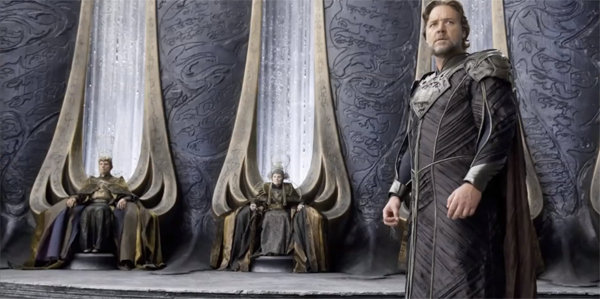
The movie is a retelling of the destruction of Krypton and General Zod’s invasion of Earth, while also being an origin story for Superman. The film opens in a cool reinterpretation of Krypton; it’s a little over the top, but it’s fun and unique to see. There we see Kal-El’s birth, and then Jor-El’s warnings of the destruction of Krypton, and then Zod’s attempted coup, and then Jor-El and his wife Lara sending Kal off of Krypton to Earth. It’s an intense opening and it sets up pretty much everything about the story we need to know, but it’s done so hastily. Everything mentioned happens in fifteen minutes. I bring it up though, because this is where the biggest problem of the movie comes from, the script. David Goyer’s script isn’t the worst thing ever, but it feels like it was rushed; there needed to be a second set of eyes on it to go back and see where they could have reworked the pacing. Instead though, the film moves at rapid speed when it should have slowed down.
“Look son, I already told you that maybe letting kids die isn’t the worst idea ever, so maybe I’m not the best person to ask advice from.”
However, this film brings two unique aspects to the table that we haven’t seen in other Superman adaptations that makes this movie stand out. The first is Clark Kent’s uncertainty in discovering his powers. During Clark’s searching for who he is and his flashbacks, we don’t see the stereotypical Superman emerging. He’s not overly confident and trying to be the most wholesome character, nor is he a total doofus. Henry Cavill plays the role of Clark Kent with a lot of subtlety, and focuses on the nuances of a young man discovering his true past, and what his future can hold. He tries to keep the ideals of his fathers from different planets real, but he’s also trying to grow as an individual. Some people didn’t like Cavill’s performance and felt that he was too quiet to be Superman, but the movie doesn’t start with him already as Superman, it’s about how he grows into that role. This is unique as most Superman adaptations (say for Smallville) never dwell on the difficulties of Clark Kent becoming the Man of Steel. It usually starts off with him discovering that he has super powers, and then boom, he’s the Man of Tomorrow! Man of Steel does examine a growth as Clark Kent.
The second aspect that makes this film unique is the action. Superman now has to actually fight, and the action scenes are pretty impressive. They give a lot of weight to the stakes of the movie, and the threat of Zod seems less goofy. Michael Shannon’s portrayal is truly menacing, and disturbing, yet he has a true purpose for his actions that makes him genuinely terrifying and slightly sympathetic. His goal to try to save the Kryptonian people is better than Superman II‘s General Zod who basically wants to take over because he’s got nothing better to do. It’s also a more interesting conflict, because Superman has to fight his heritage to save his adopted home. Plus, it’s also fun to see Superman actually punch someone.
The visuals of this film are classic Zack Snyder (though there is a significant lack of slow motion), but the movie looks beautiful. Snyder has a much stronger mastery of CGI than Singer did, so he makes the flying scenes look fantastic. People constantly complain about a lack of color, but that’s only in the last action scene, most of the movie has a lot of color. The film does chose to be in a more sepia tone look, which makes it stand out from other films, though I will admit that the look could have been brighter. The darker look works for Batman, but it doesn’t really work for Superman.
That’s the second biggest problem with the movie, and this comes back to the script, Goyer and Nolan were banking on the success of The Dark Knight trilogy to influence their Superman film. And while it makes sense to try and make it like that (Nolan’s Batman films were a huge success), it doesn’t really work for Superman. The grounded realistic setting can let Batman thrive, but for Superman it just makes the film feel bleak. I think that it’s interesting to see a darker Superman, and liked how they actually did make him a more dynamic character than in his previous versions. And we see this Superman evolve into the more confident well-known Superman.
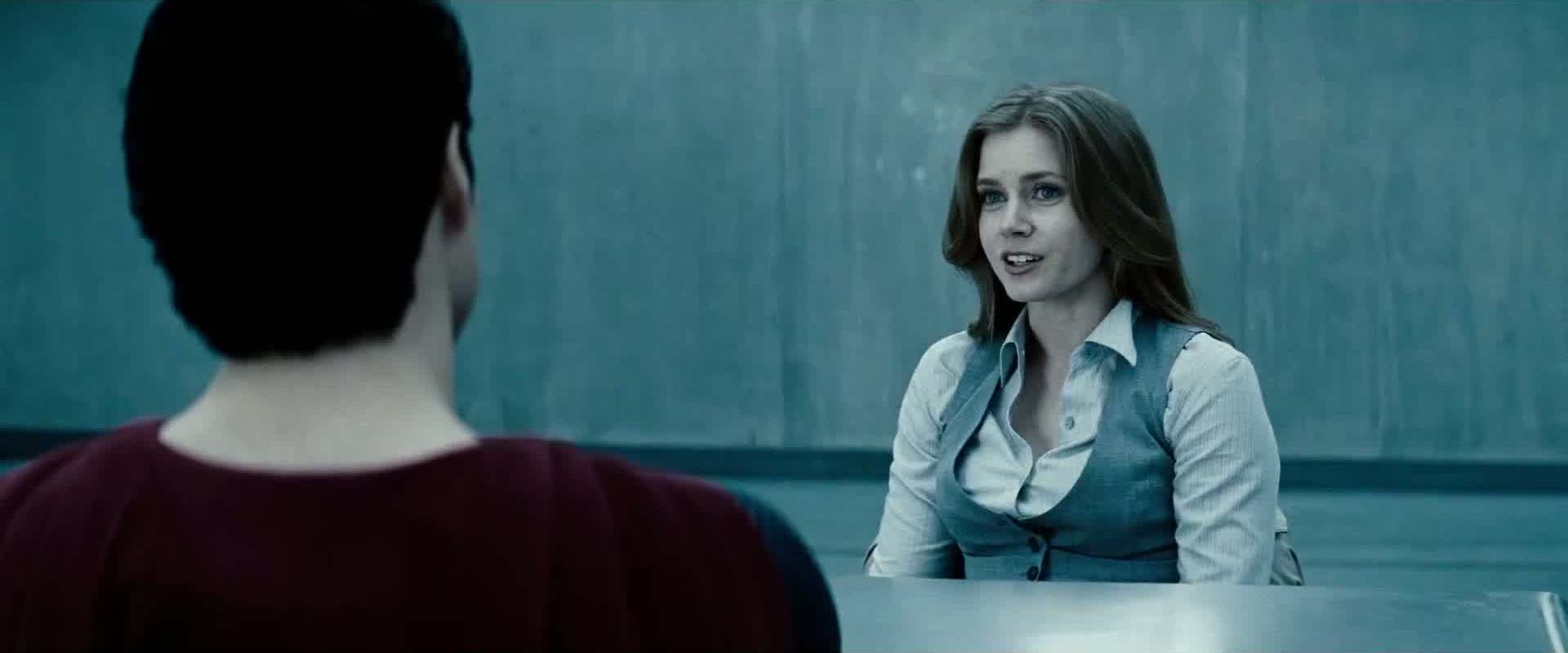
The supporting cast does well also. Michael Shannon plays a devastating, and traumatic Zod. Kevin Costner is a thoughtful and patient Johnathan Kent (though some of his advice is a little questionable, leave the kids on the bus to die? Really?). Laurence Fishburne is the most realistic editor for a major metropolitan newspaper ever played. Diane Lane as Martha Kent is wonderfully motherly, but also tough and endearing. Russel Crowe was a great Jor-El, and really puts in a lot of effort for this role. But, the stand out performance for me will always be Amy Adams as Lois Lane. Mainly because, she’s not an idiot! She’s able to find out who Superman is, acts like a real journalist, is smart enough to know how to defend herself, and actually has a more realistic personality than most other people who play Lois Lane.
But, the biggest thing about this film is the climax, and this is where everybody has their issues with the movie. The amount of destruction is so high and violent that it just made people feel very depressed about seeing the first Superhero on the big screen again. And yeah, it seems a little odd that there’s an emphasis on so much destruction when Clark Kent is claiming to value their well-being. It goes back to the idea of realism, and excessive realism just doesn’t work for a character that is an alien coming down to save us from other aliens. So, when we see the monochromatic gray look of the devastated city blocks of Metropolis it just doesn’t feel as triumphant as a Superman film should be. And I do agree with the general consensus that Superman should have saved more people. However, I like that the military is involved with fighting Zod too. It makes this fight everyone’s fight, and not just the superhero’s problem. This is an issue that everyone is reacting to and trying to help with.
“Over 50% of Metropolis is still standing, not bad for my first day.”
There’s also that Superman killed Zod. Ignoring the fact that Zod pledged to kill every human on Earth after Superman stopped him, and that there is no prison to put him in, his killing is not something Superman does with joy. He’s very upset about it. Unlike how Superman just killed Zod by throwing him in a pit in the North Pole and left him to die after taking away his powers. And before any of you say anything, deleted scenes don’t count, Superman killed Zod in Superman II. This decision for Superman to be the last Kryptonian is heavy and really sad for him. But, for some reason this decision pissed everyone off, and I’m not sure why, Superman has killed in the comics before. Perhaps the public consciousness of Superman is the “boy scout” interpretation. The happy-go-lucky Supes that most people know about isn’t as prominent in this movie as the other ones.
However, it’s a different interpretation of the character. Superman has been popular enough to go through many interpretations, and this is one take on it. Personally I love this view-point of Superman as it brings something new to the table, and actually creates unique stakes for him. We finally see him getting pushed to the ultimate brink as he has to fight a horrifying entity that represents his past and heritage. It’s an interesting choice for the film to make. But, this film could have been a bit more Superman like, more of Clark Kent as a reporter, more saving people, and a brighter tone. While it’s a rocky start for the DC Cinematic Universe, it’s certainly an interesting start and deserves to be looked at. I probably haven’t swayed anyone’s opinion, but I love this film, and feel that it definitely needs to be looked at again. There are some great treasures in the film.
Next time we go back to Batman, and look at the last Nolan Dark Knight film with The Dark Knight Rises. Another superhero movie that everyone has a strong opinion about. It’s going to be another long one guys.
Doctor Strange is filming in London and Marvel has converted a small part of the city to look like the Upper East Side of New York.
The fan footage appears show Doctor Strange and Baron Mordo rushing to the aid of a fallen Ancient One. The film crew sets up the scene for ten minutes and Sanford Dickert, the gentleman filming this for a Periscope live broadcast does an good job of narrating the scene.
Jump to the 10-minute mark to see the action.
“Just was coming into the office this afternoon and saw that someone had tried to make a small part of London look more like the Upper East Side of NYC. As I continued to watch, it became obvious that the movie was Dr. Strange, and the film crew was part of Marvel. And who do I see playing the titular character? Benedict Cumberbatch and Chiwetel Ejiofor were doing their thing while filming the death of Dr. Strange’s Master,” said Dickert.
Doctor Strange is directed by Scott Derrickson and stars Benedict Cumberbatch, Chiwetel Ejiofor, Rachel McAdams, and Michael Stuhlbarg with Mads Mikkelsen and Tilda Swinton. The film will be shot in several locations around the world, including London, New York, Hong Kong and Kathmandu, Nepal.
Doctor Strange follows the story of neurosurgeon Doctor Stephen Strange, who, after a horrific car accident, discovers the hidden world of magic and alternate dimensions.
Doctor Strange opens in U.S. theaters on November 4, 2016
I was lucky enough to get to stay in Niagara on the Lake this week. For those who don’t know, Niagara on the Lake is a little city in southern Ontario famous as being both the home of The Shaw Festival and the original capital city of Upper Canada. This out-of-the-way town, originally named Newark, is also home to numerous estate vineyards and some of the finest craft breweries in Ontario. As far as I’m concerned, no trip to Niagara on the Lake could be complete without a stop at Niagara Oast House Brewers to fill up my growler(s) with some of their tasty brews. Niagara Oast House Brewers only came onto the craft brewing scene recently. Barn Raiser’s earthy taste, though, makes it seem like the product of an old family recipe.
First Sip
The home of Barn Raiser and other great brews
Barn Raiser’s low carbonation level brings out its excellent balance between malt and hops, and I have to remind myself not to slug it back in huge gulps. This ale is too smooth to be considered an India Pale Ale and by virtue of its being brewed in Canada it doesn’t qualify as an American Pale Ale. This ale is definitely bitter enough to require an adjective though. This Country Ale leaves you wanting more so it’s a good idea to pair it with salty foods, like brine chicken or some well-garnished oysters.
Last Sip
Barn Raiser Country Ale is tough to top for drinkability. It goes without saying that you should decant this beer, especially if you bought a growler of it! Its fruity flavour is too good to be properly appreciated when chugged out of a tall boy or 750 mL bottle. Although I generally prefer to drink my beer cold, I could see drinking this one at room temperature. Sometimes letting a beer go warm can be a good way to bring out its flavour, and Barn Raiser Country Ale has nothing to hide.
Other Comments
This is another craft beer that suffers from distribution problems. Currently it’s only available for purchase at the brewery and at area restaurants. There are rumours that Barn Raiser Country Ale could be hitting the LCBO‘s shelves soon, though, so keep your Ontarian fingers crossed.



 As snowstorm Jonas hit the East Coast of the United States this past January, dropping over 30 inches of snow in some areas, the theory of “last snow ever” does not sound so bad. (Especially for those of us who lost three days t that record-breaking storm.) But in the world of Joe Harris and Martin Morazzo’s Snowfall #1 it may be exactly that.