


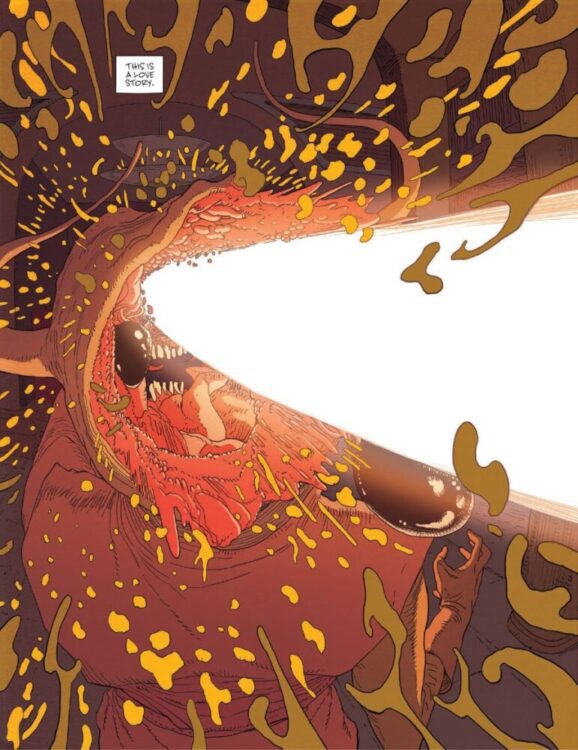
From It’s Only Teenage Wasteland and Wyrd writer Curt Pires comes a blast of a space opera comic in Galactic. Joined by artist Amilcar Pinna, this book is packed to the brim with hard-hitting action, slick dialogue, and a story that ranges from the dens of scoundrels to intergalactic political conflict.
I sat down with Pires to find out about his approach to writing Galactic, his influences, and what the comics medium can bring to the space opera genre.
Hi Curt, congrats on Galactic!
MFR: What made you want to sit down and write this sort of grimy, uncouth space opera?
Pires: I don’t know that I’d call it uncouth. There’s certainly moments of sincerity and grace amidst all the violence and sex. It’s just like our world—where it’s a glorious mix of all
these beautiful and disgusting things. Except here we have rocket ships and laser guns
and aliens, too.
MFR: I can tell by how the dialogue flows and how the story wears its influences on its sleeve that this must have been a fun book to put together. What were some of those major influences, and how did they help you shape what Galactic was going to be?
Pires: The nonlinear narrative stuff that Tarantino does was formative to me as a writer, and that’s on display here. I love Star Wars so that one’s obvious, too. Euro comics like The
Incal were a big inspiration, and the irreverent postmodernism of something like Rick
and Morty inspired the way we shove the Star Wars mythos in a blender and turn it into
our own new twisted story.
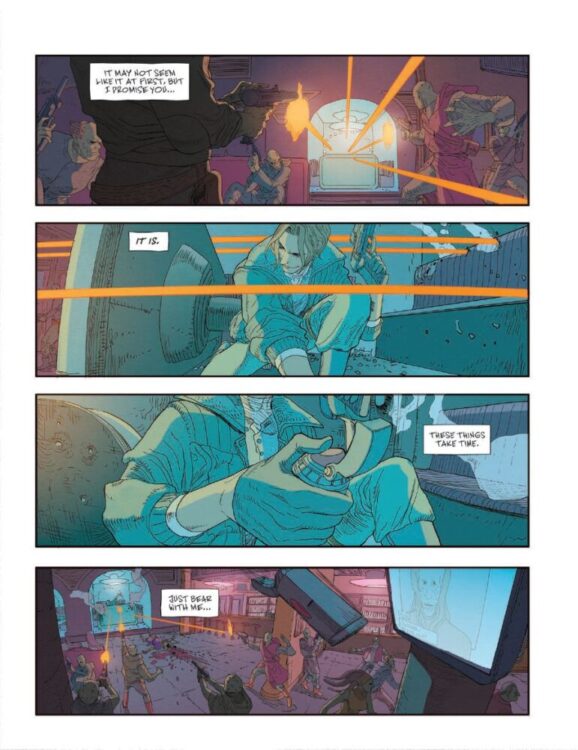
MFR: Amilcar Pinna’s work here makes this sci-fi story really stick out from the pack. What was your work process like with him, and did his version of your scripts ever surprise you?
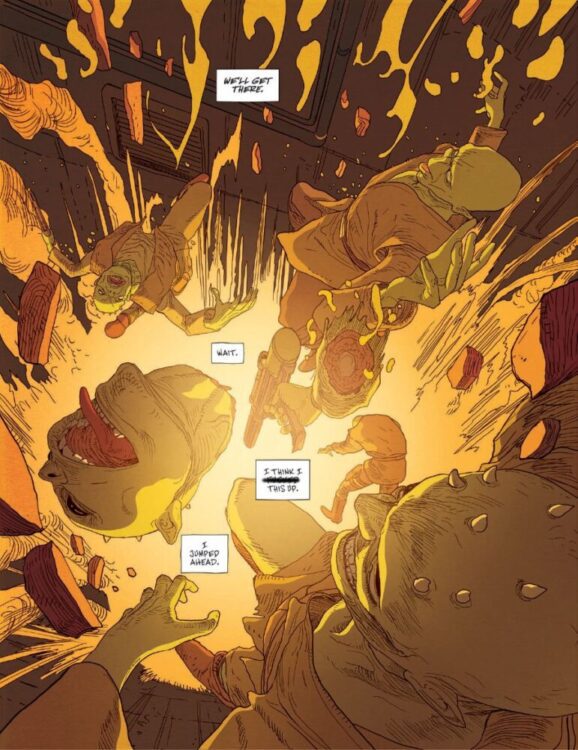
Pires: I had a feeling Amilcar would excel at the material, and he did. I love his use of fisheye and the way he plays with perspective, so it’s been a joy seeing him bring the book to life. He handles the high-page-count stuff with as much beauty as he does the two-page
splashes.
MFR: How was working with the folks at DSTLRY, and how did they help you bring Galactic to life?
Pires: It’s great. I’ve worked with most of the core people behind DSTLRY for many years. So it’s like working with friends in a way. I’m very in love with the format and how it gives us a chance to do the IMAX version of comics—big, widescreen epic storytelling on a
massive canvas.
MFR: For any who may not know, you also work with a lot of film and television studios. In your mind, what specifically about comics gives the medium some advantages over those other art forms – specifically when creating a space opera such as Galactic?
Pires: I’ve been lucky enough to work with a bunch of studios over the years and the best part of comics is the collaboration—and the immediacy. You don’t have five years of working on something and it going nowhere. Amilcar hit the ground running on this and we’ve already got over 90 pages done. It’s amazing seeing it come to life. Comics is truly my first love.
MFR: Going back to the influences that helped shape Galactic, in crafting this story was there an intent to specifically pay homage to the sci-fi creators that built the genre (Moebius, Herbert, Lucas)? In your process, how do you separate those influences from your specific style and the story you want to tell?
Pires: Just doing things and going places that are a little more grounded and character driven than maybe sci-fi traditionally is. At its heart this is really a book about family and found family, and we take the time to explore that. I feel like so many of the stories that were influential on this are so plot-driven they maybe don’t get the time to slow down and
explore that. Of course I have the benefit of hindsight and reverse engineering what
works for me and didn’t work for me in those stories.
Be sure to head to your local comic shop or to dstlry.co to preorder Galactic #1 before FOC on October 6th!
