


Wes Craig’s Kaya saga has proven itself a standout in Image Comics’ fantasy-adventure lineup. It carves a unique path somewhere between the sweeping scope of Star Wars and the heartfelt character dynamics of Avatar: The Last Airbender. Kaya #28 takes a deliberate departure from typical fantastical fare, offering an introspective and emotionally resonant chapter that elevates the series beyond the action-adventure genre. This issue does not rely on grand battles or overt magical displays. Instead, it centers its entire drama around a character’s absence, specifically that of the titular heroine, Kaya.
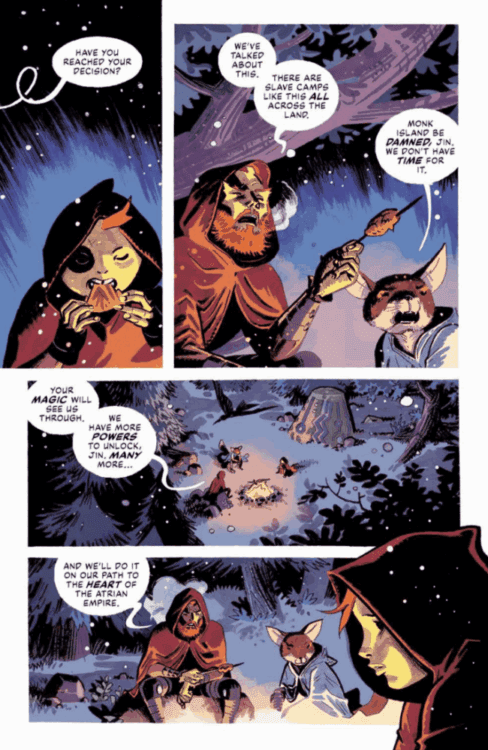
Kaya, ever the pragmatic provider, has ventured forth to perform the arduous and often thankless task of hunting for food. Her departure leaves a void, one that immediately stirs a potent mix of tension and vulnerability within the disparate group of starving refugees and rebels. Foremost among them is her younger brother, Jin, who finds himself unexpectedly thrust into a position of near leadership, a role for which he is clearly unprepared. The narrative meticulously tracks the consequences of Kaya’s absence. Jin, in his earnest but inexperienced attempt to fill his sister’s shoes, nearly makes a rash decision. This moment beautifully expresses both his inherent good heart and his profound lack of seasoned judgment. This moving narrative beat transforms the series into a poignant exploration of childhood, of the often messy and unpredictable process of self discovery when one is forced to navigate the world without a guiding hand.
Craig takes a calculated risk in structuring an entire issue around the reverberations of Kaya’s being elsewhere rather than her central participation. It is a risk that undeniably pays off. What could have easily devolved into a dismissive narrative detour instead becomes a thoughtful and compelling examination of a community under stress. The characters, stripped of their usual anchors, no longer feel like archetypes. Instead, they emerge as fully realized individuals. This issue achieves a remarkable balancing act, maintaining its accessibility for younger readers while simultaneously offering a rich, nuanced experience for adults. Younger readers, particularly those with siblings or active experiences of being the youngest one, will undoubtedly find themselves empathizing deeply with Jin’s struggles and the anxieties of being left to fend for oneself and their circle. For adult readers, this issue evokes a healthy dose of nostalgia, serving as a gentle reminder of the makeshift communities forged in the margins of childhood, often when adult guidance proved insufficient. It recalls those moments when sisters, cousins, or trusted friends stepped up, often preventing things from completely unraveling.
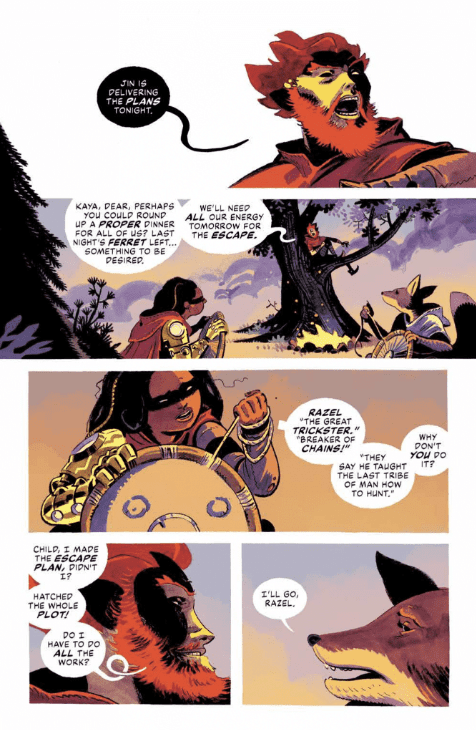
Wes Craig’s linework remains a special achievement. His style is kinetic and deeply intimate, drawing the reader into the characters’ most vulnerable moments. Each character is rendered with an astonishing degree of expressiveness. The panel layouts are consistently varied and thoughtfully constructed. This is not simply a sequential arrangement of images; it is a meticulously choreographed dance of visual storytelling. The aesthetic of Kaya #28 leans into a rugged, almost vintage sensibility, clearly evoking the stylistic hallmarks of comic book legends like Jack Kirby and Jim Steranko. Craig himself has cited these two titans as key influences in his endearing “Why I Believe in Comics” found on Image Comics’ website. Yet, this is no simple exercise in retro homage. Craig innovates as much as he echoes, ensuring that each page stretches the world’s emotional limits as much as its magical ones. He does not simply replicate past styles; he internalizes them, filtering them through his own unique artistic vision to create something fresh and invigorating. A special commendation must be given to the textural quality of Craig’s ink work. It is rough and unyielding when the harshness of the world demands it, yet remarkably clean and precise when clarity is paramount. Every line, every shadow serves a deliberate purpose, contributing to the overall narrative and emotional weight of the issue.
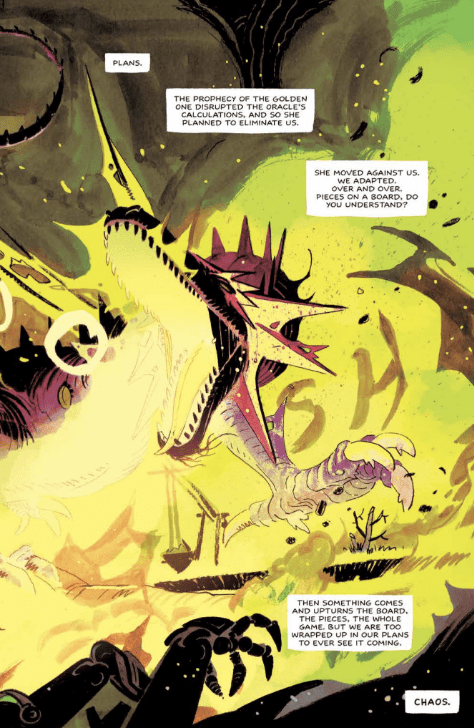
Colorist Jason Wordie’s masterful use of clashing atomic greens, purple gradients, and sudden whiteouts enhances the harsh world of Kaya. This is not a world polished by the glossy sheen of high fantasy. Wordie’s palette gives us a more gritty world, imbuing the landscapes and characters with a sense of enduring struggle and resilience. The watercolor style backgrounds deserve particular praise. They possess a subtle quality that softens the often stark borders between fantasy and memory, enhancing the overall tone of the issue without ever overwhelming the characters or the narrative.
Tom Napolitano’s lettering performs an immense amount of heavy lifting in this issue. He is tasked with the delicate balance of presenting raw emotional dialogue, hushed arguments, and moments of tense silence. The placement of word balloons is always clear and intentional, guiding the reader’s eye seamlessly across complex scenes without ever creating distraction or confusion. His font choices are finely tuned to the emotional tenor of each moment, never resorting to overt melodrama, yet never feeling flat or lifeless. When emotion surges, he allows the art and the words to breathe, giving them the space they need to resonate. It is professional, confident work that seamlessly integrates with the other artistic elements, enhancing the overall reading experience without ever drawing undue attention to itself.
At its very core, Kaya is a story about responsibility and rebellion, viewed through the eyes of children who are prematurely forced to shoulder burdens typically reserved for adults. Kaya herself emerges as a brilliant protagonist, not because she is an invincible paragon of stoicism, but precisely because she is so intensely real. She is strong, yet undeniably angry. She leads with an unwavering resolve, yet she feels deeply, experiencing emotions that reflect the intelligent and passionate young women navigating the complexities of real life. Her emotional honesty, even when she is not physically present on the panel, sets her apart from more archetypal fantasy heroes. She embodies the spirit of that reliable older sister who always managed to keep things together when the adults failed to do so. This blend of capability and heartfelt anger makes her a truly compelling and relatable figure.
There is an old adage that states you don’t know what you’ve got until it’s gone. Kaya #28 constructs an entire narrative around this profound truth. And then, softly but surely, it reminds you that the individuals who tirelessly hold everything together are often the ones whose efforts are most taken for granted. This issue is thoughtful, artful, and profoundly emotionally honest. It serves as an ideal entry point for new readers, a deeply satisfying narrative beat for earlier fans, and a gentle yet potent reminder of the often unacknowledged importance of young women who courageously carry the weight of worlds, both literal and emotional. Without spoiling the ending of this issue, the reader is left with a powerful realization. Sometimes, the young women in our lives possess an uncanny understanding of exactly what needs to be done. And perhaps, we should take a moment to appreciate them while they are still here.
