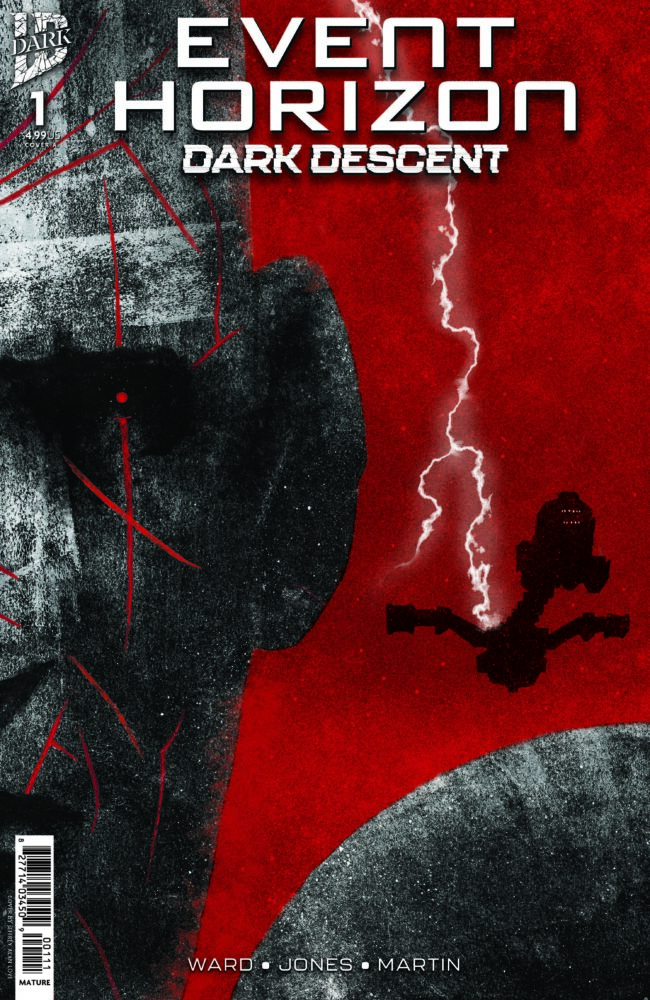
Science Fiction. Tragedy. Horror. This is the simple framework from which the Event Horizon movie hung, and it also forms the backbone of IDW’s new prequel comic book series, Event Horizon: Dark Descent. It is linked directly to the events of the film and draws on the visual and narrative styles of the original. Often, when a tie-in comic is announced, there is an understandable air of concern about the treatment of the original. But when you have a writer like Christian Ward attached to the project, there is surely nothing to worry about.
Credits:
Writer: Christian Ward
Artist: Tristan Jones
Colours: Pip Martin
Letters: Alex Ray
The comic book industry has always had strong ties with other media and the expansion of a company’s intellectual properties into print is by no means new. However, there is a current trend for revisiting older properties to rework or expand, and to bring much loved classics to a new audience. See the Universal Monsters series from Skybound as a prime example. With Event Horizon, IDW are mining the story of a film that is nearly 30 years old and wasn’t particularly well received upon release, but has become something of a cult classic since then. It isn’t part of a franchise (an announced sequel never materialised and a television series failed at the pre-production stage), but it has been influential to a crop of modern movie makers and storytellers. We are also closer to the time period that the movie is set than we are to its release date. The distant future is not so distant.

Credit: IDW
In Event Horizon: Dark Descent, the creative team returns the audience to the launch of the Event Horizon and reveals what happened to the space vessel before the events of the movie. I would expect that the majority of the audience for this comic have already seen the film, although the creators may bring some fresh readers to the IP, so most people reading the comic will know exactly where it’s going to end up. In fact, the writing acknowledges this throughout by making references to elements of the movie. Not in an ‘Easter Egg’ or self aggrandising know-it-all way, but as important aspects of the narrative. The characters of the Event Horizon crew rely heavily on snippets of information revealed in the movie, and Christian Ward has picked up on these and turned them into fully rounded, bold as brass characters that the readers can engage with, despite knowing their ultimate fate.
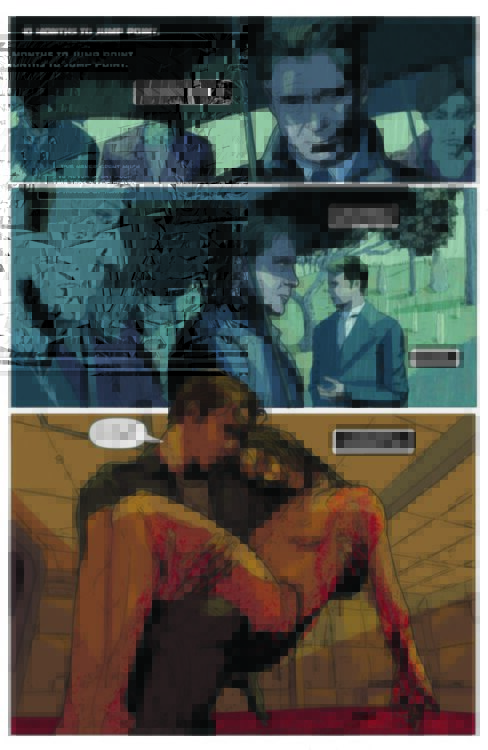
The comic opens with the distressing events taking place in Doctor Weir’s life, the central character played by Sam Neil in the movie. These events form Weir’s character, partially by demonstrating his detachment from the world around him and his obsession with space travel, but it also brings the gruesome dreams that haunt the creator of the Gravity Drive. It is as if Ward is suggesting that the creators’ dark emotions are somehow built into the machine and therefore responsible for the horror that is to come. The links between the creator and that which they create is a fundamental part of art. Even mass cultural objects such as monthly comics have an aspect of the artist within the art. J O’Barr’s The Crow and Barry Windsor Smith’s Monsters are both extremely personal emotional journeys, despite their surface appearances. The Event Horizon story is also an emotional journey that dissects an imbalanced human psyche as a way to explore larger questions about the nature of good and evil. In Dark Descent, Ward is setting up the same kind of exploration. Yes, there is an impressive looking spaceship flinging itself through the cosmos, but this comic is about the crew of that ship and the horrors they bring to their own lives.
Credit: IDW
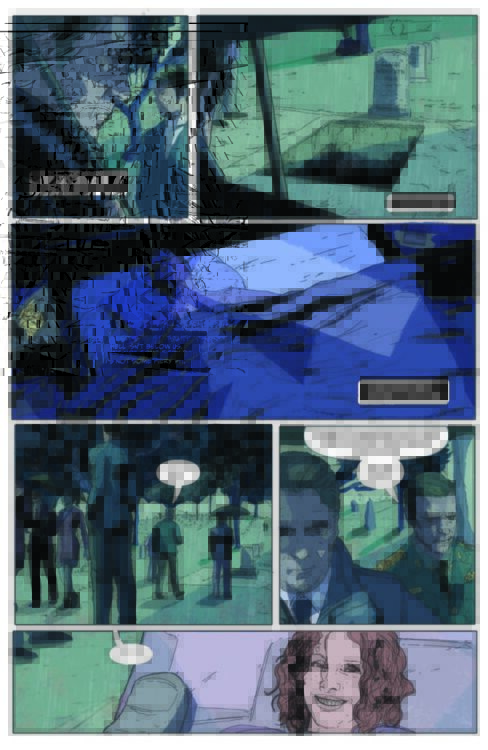
One of the reasons why the movie is so compelling is due to the superb visuals orchestrated by cinematographer Adrian Biddle. Artist Tristan Jones has been able to mimic the cinematic style while maintaining a distinctively comic book feel. His artwork is grainy and he uses a combination of fine lines and chunky black areas to define the shapes on the page. The characters emerge from the backgrounds thanks to the subtle colouring by Pip Martin who shifts the tones slightly in the panels to distinguish between character and object. This works especially well in the long shots where Martin’s colours create layers out of Jones’ inks, with the characters sitting on top of the backgrounds.
Jones focuses on the emotional expressions and gestures of the characters throughout, jumping between close ups and long shots when required. The characters are full of animation and life, which is beautifully contrasted to the deadness of space and the cold, mausoleum of the Event Horizon itself. But where this comic really shines is in the disturbing and horrific images that haunt the story. At its heart, Event Horizon is a haunted house story in space, sharing more in common with the novels Hell House and The Haunting of Hill House than it does with sci-fi epics like Star Wars or 2001: A Space Oddity. The language and imagery is drawn from these types of stories. The haunting image of Weir’s dead wife whispering “come find me” has roots in Emily Bronte’s Wuthering Heights, while the actual visuals by Jones and Martin reference Clive Baker and the video nasties of the mid to late 1980s. All of these influences are pulled together to make something larger than the sum of its parts. The narrative is compelling and the story elements build on each other creating a tension that keeps the readers locked into the story.
Credit: IDW
One of the worries about the adaptation of a story from one medium to another, is that it will not find its own voice or adopt the forms of the new medium. Event Horizon was a cinematic experience which used the screen as a passageway into hell, with quick editing and blink-and-you’ll-miss-them shots which left a blurred after image in your mind. This is difficult to achieve in a comic because the reader has full control over what they see and how long they see it. Jump scares are tricky because only a page turn can hide a horror. However, the creators behind Event Horizon: Dark Descent have switched out the jump scares for upsetting, shadowy images and black panels with only a partial image visible. These linger with the reader as they flip through the rest of the comic, hanging over everything like a swinging corpse on the gallows.
It was with a nervous trepidation that I sat down to read Event Horizon: Dark Descent because I have been a fan of the movie since it first came out and honestly did not know how someone could capture that movie in comic form. But the story is tight, the artwork superb, and the emphasis has been on creating a comic version of the film, not on recreating the film in a comic book. There is a subtle difference that these creators understand. If you enjoy the movie or are a fan of gruesome haunted house stories, then this comic is not to be missed. It has a deeply disturbing presence and, in truth, has me slightly concerned about the mental health of the creators.