Home Blog Page 281

INTERVIEW: Director, Writer, And Actor Marianne Hettinger Discusses Her Amazon Film Prince Harming

Prince Harming is a new film from multi-faceted filmmaker Marianne Hettinger who fills the roles of producer, writer, director, and star in a movie that tackles dark issues with a little comedy and a lot of hope.

Marianne’s latest film lives on Amazon, where it is available for viewing in your favorite pajama pants. However, be warned, the film’s sweet opening, a girl meets boy rom-com setup takes some dark turns. Prince Harming is a mix of comedy and heavy drama starring Andreas Beckett as Max Bauer, a former Olympic ski jumper. Marianne is Victoria Timm, a woman holding out hope for her Prince Charming. Victoria idolized Max as a young woman, so when she meets him in real life, and they hit it off, Victoria thinks she’s found her happily ever after.

PopAxiom spoke with Marianne about her road to becoming a filmmaker.

Editing In My Brain

Marianne was born and raised in Germany. “My earliest movie memory was when I was five years old … I was not allowed to watch television yet. I snuck out the window, and from the outside, I watched An American In Paris with Gene Kelly.”

Marianne would peek through the housekeeper’s window and think, “I want to do what he does!”

Unable to hear the sound, the housekeep would “… record it for me. I would listen to it under my pillow on a tape recorder. So, this is like the earliest form of editing in my brain. I knew what American in Paris looked like, and then I’d listen to the sound and put the two together.”

Marianne’s creative soul burst forth from an early age. “I started writing when I was seven years old with fantastic stories about dragons and witches.”

Marianne first came to the United States at 16 then returned long-term at 19. “It was quite a journey. I first had to learn the language.”

The young, future writer and director “… came to New York by myself. I studied dancing, acting, and directing at the National Shakespeare Conservatory.”

Marianne’s first attempt at directing a film came in the late 90s. “I saw someone in the park singing … he was his own one-man-band. Amazing guy. I thought, ‘I gotta film him!’ So, I asked his permission and started making a documentary about him. That was is in 1999.”

prince harming-amazon-film

About Prince Harming

Marianne never finished that documentary, but she pressed on to write, direct, and produce five shorts and two feature films.

Her latest film, Prince Harming, is a personal, semi-autobiographical story. “I wanted it to look like a documentary.”

Many of Marianne’s real-life experiences form the basis of the film. “What happens when a woman falls in love with someone she idolized all her life? She meets the real person, and it’s a real Jekyll and Hyde persona.”

Prince Harming only happened after Marianne took “… a few years to gain the proper perspective.”

Prince Harming tackles topics such as manipulation and domestic abuse. “Your self-esteem gets chipped, and after a while, you feel inferior, and you have this assigned role. People say, ‘Why didn’t you get out of it?’ But you have to empower yourself to get it done.”

https://www.youtube.com/watch?v=ZUm-IfHlwiU

Indie Filmmaking

Making movies is always a battle against how much money the production has access too. It’s even more of a challenge the indie film world. “It’s all about finances,” said Marianne. “I find wonderful people to work with who will work on deferred pay.”

Prince Harming, like any movie, featured plenty of ups and downs during production. “In the first week, the DP [Director of Photography] was having a heart problem. He turned pale and had to go to the hospital. The whole crew was there. Thankfully he recovered, but he couldn’t do the shoot. I had already invested the money and hired the crew so I had to find a new DP in 12 hours.”

Teamwork makes the dream work, and Marianne is part of a tight-knit and reliable network. “I’m part of Film Fatales, a women’s directors group. They recommended several people to me for the film and I found our backup DP Valentina Caniglia. She had to improvise because we had a whole different setup.”

For the shoot, Marianne wanted to keep it as real as she could. “We shot in this tiny apartment. At times we crammed in 12 to 18 people in a 250 square foot apartment for a whole month.”

Darkside of Entertainment

Marianne is a stunning woman in the vein of classic Hollywood. She’s tall, blonde, and her face lights up a room. “I lived in New York by myself in Hell’s Kitchen. It was, at times, dangerous and I was constantly approached by people wanting me to model and be in their projects. I came to a city where I had no family, and I just wanted to be an artist.”

As explored in Prince Harming, a lot of abuse begins with manipulation. Abusers tend to seek out people who are isolated too. Marianne’s personal #MeToo stories are all too familiar for women and she makes a point to say, “It happens to men too, by the way, so many of my friends were approached in those ways.”

Marianne started writing Prince Harming in 2013, long before the #MeToo movement, but she could not have completed the film in a more timely manner. “It’s a power play. Here’s a man who was looked up to as a public persona, and he takes advantage of that.”

Stories of sexual misconduct and harassment by powerful men often involve them taking advantage of the trust given to them by merely having status. Marianne’s personal experiences make Prince Harming all that more grounded and terrifying. “There are subtle signs at first, and I wanted to empower people to come forward before it gets to a darker place.”

Wrapping Up

Marianne says some of the filmmakers who inspire her are “Werner Herzog. He’s fantastic. Oliver Stone. I’ve met him. I think he’s so gutsy. Susan Seidelman, who directed Desperately Seeking Susan.”

Above all, there is one original inspiration for Marianne: “Gene Kelly …”

In the age of remakes, reboots, and re-imaginings, what would Marianne love to create again? “Anything Gene Kelly made. Singing in the Rain. I know it’s sacred, but I’d do it a little darker and more humor.”

Prince Harming is available on Amazon. Coming up, Marianne says, “I’m working on a musical. I also have a script about sex trafficking that I wrote with a real FBI agent. It’s about the Russian mob and an international sex trafficking ring.”

Is Prince Harming on your watch list?

Thanks to Marianne Hettinger and Impact24 PR
for making this interview possible.

Want to read more interviews? CLICK HERE.
Monkeys Fighting Robots Youtube

AMAZING SPIDER-MAN #45 – Who Will Die? ‘Sins Rising’ Part One

AMAZING SPIDER-MAN #45

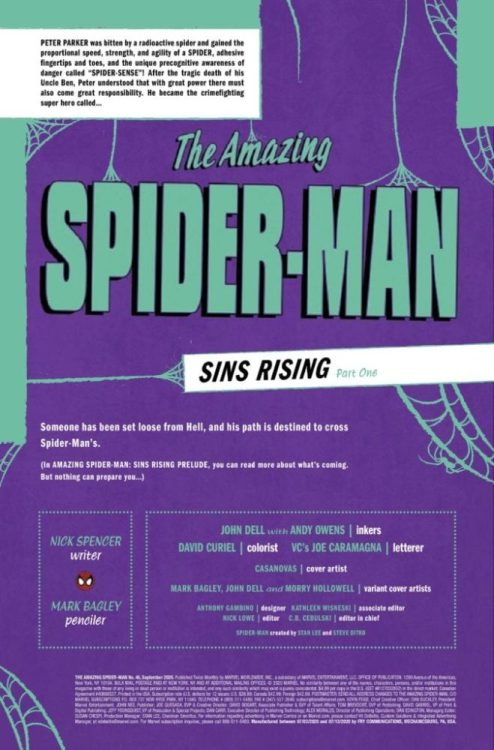
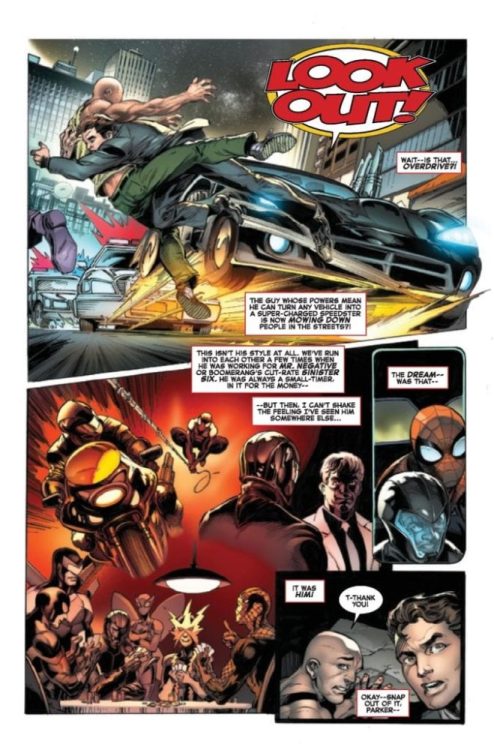
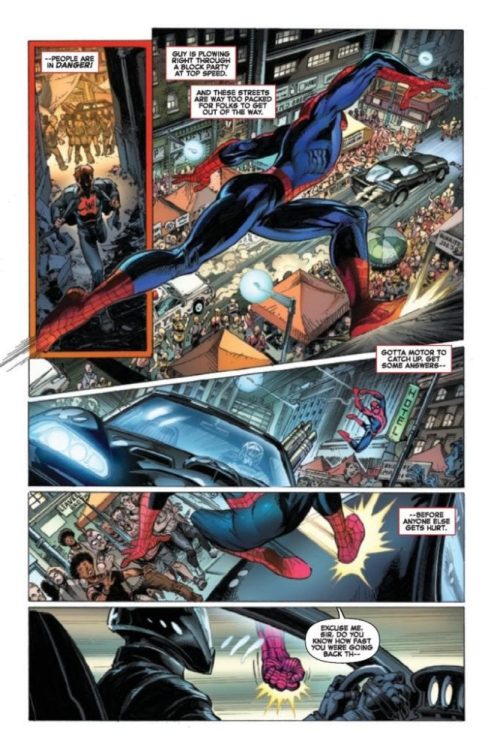
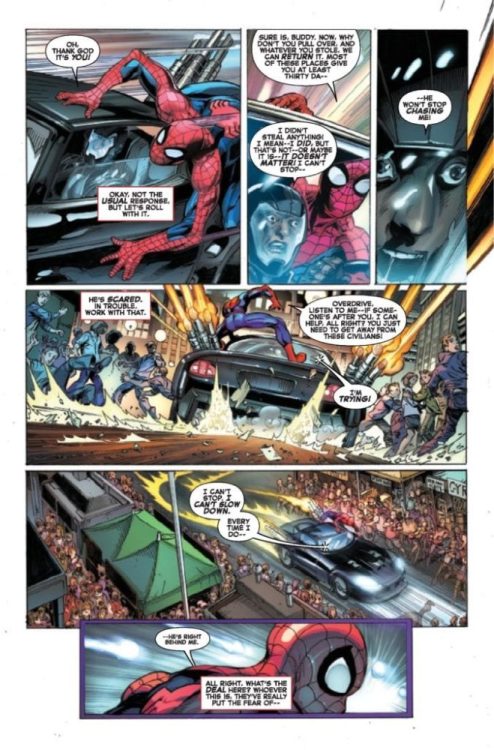
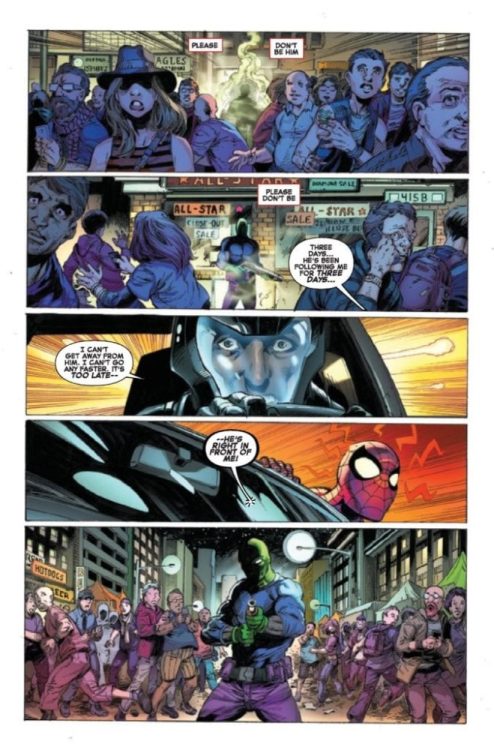
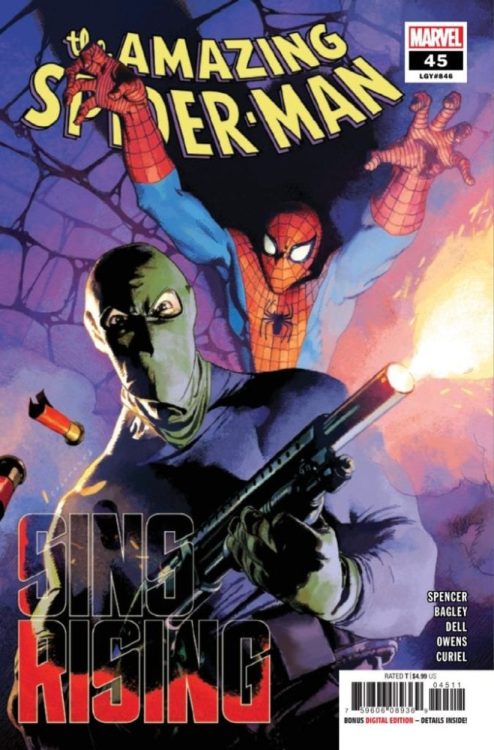
AMAZING SPIDER-MAN #45 hits your local comic book shop on July 29, but thanks to Marvel Comics, Monkeys Fighting Robots has an exclusive four-page preview of Nick Spencer’s Sins Rising Part One.

The book is written by Spencer with art by Mark Bagley. John Dell and Andy Owens inked the issue. David Curiel added a dark tone with his colors, and you will read Joe Caramagna’s letter work. Casanovas created the iconic cover to part one.

About AMAZING SPIDER-MAN #45:
“SINS RISING” PART 1!
SIN-EATER is back and New York City is in TROUBLE. Who will the shotgun-toting villain target, and can Spider-Man stand a chance against him?
Tread lightly with this preview


Where does Spencer rank as a Spider-Man writer? Comment below with your thoughts.
Amazing Spider-Man #45 Side Notes:

Stan Lee and Steve Ditko created Peter Parker and Spider-Man with his first appearance in Amazing Fantasy #15 (1962). Amazing Spider-Man #1 hit the newsstand in March back in 1963.

The Sin-Eater aka Stanely Carter was created by writer Peter David and artist Rich Buckler. He first appeared in Peter Parker, The Spectacular Spider-Man #107 from October 1985. There are several interesting plot points to Sin-Eater’s short-lived run on Spider-Man, with the most interesting being how he’s tied to Venom’s origin. From Wikipedia – The public revelation of the identity of the Sin-Eater as Stanley Carter by Peter Parker was responsible for the ruin of Eddie Brock’s journalistic career, as Brock had published a series of articles on the Sin-Eater in The Daily Globe, based on his interviews with another man who claimed to be the Sin-Eater, Mr. Emil Gregg (“a compulsive confessor”). This led to Brock’s hatred of Peter and eventually to his joining with the alien symbiote Venom.

Monkeys Fighting Robots Youtube

DC Preview: BATMAN: THREE JOKERS #1 – Do Ya Wanna Know How He Got Those Scars?

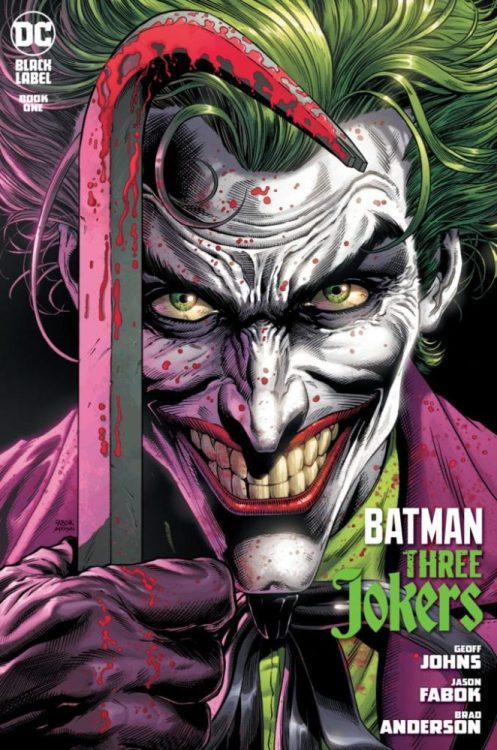
Batman Three Jokers #1, cover
Batman: Three Jokers #1

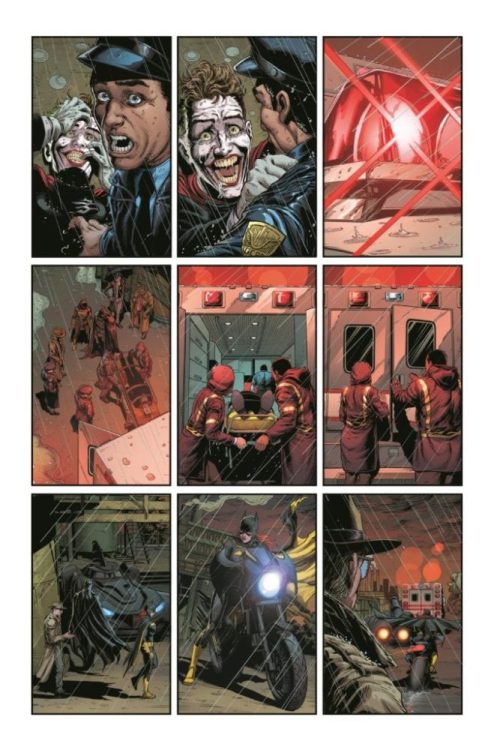
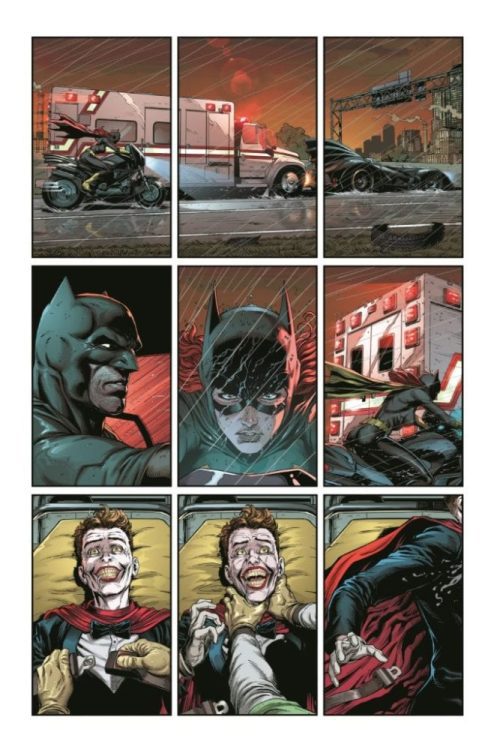
DC Comics has released a new preview of the upcoming BATMAN: THREE JOKERS #1, available at your local comic shop and digital on August 25th. There’s more than one Clown Prince of Crime, and this new series promises to reexamine “the myth of who, or what, The Joker is and what is at the heart of his eternal battle with Batman.”

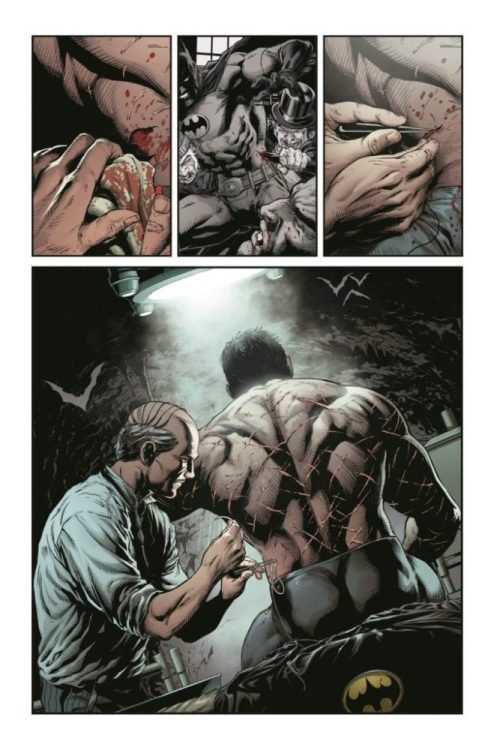
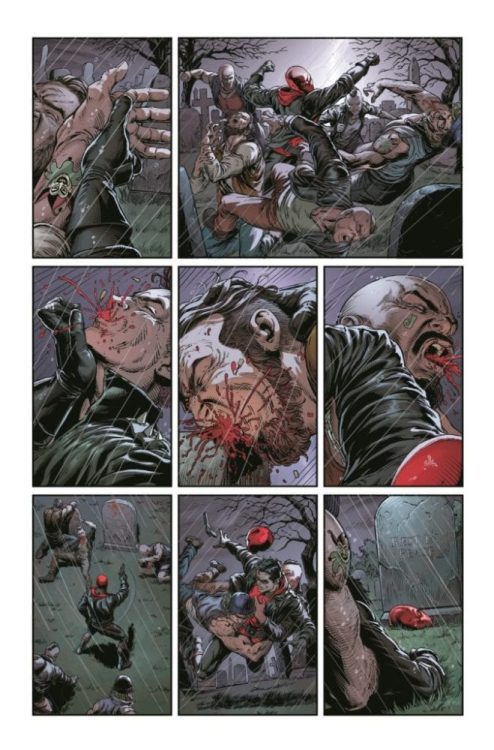
Geoff Johns is writing the first issue along with illustrations by Jason Fabok. You can read more about this new series in the official DC press release below, and check out the keen preview images.

Are you excited for the BATMAN: THREE JOKERS series? Let us know what you think in the Comments section, and please share this post on social media using the links below.

Link to Blog Post:

https://www.dccomics.com/blog/2020/07/23/new-artwork-from-batman-three-jokers

“Scars.”

“Damaged Goods.”

“Being Better.”

“Irredeemable.”

Comic fans everywhere have been anxiously awaiting Geoff Johns, Jason Fabok and Brad Anderson to explain themselves when it was revealed that there wasn’t just one, but three versions of the Clown Prince of Crime that have bedeviled Batman and his crimefighting allies.

Eager readers can rest assured that there’s not much time left to wait! Batman: Three Jokers #1 hits comic book stores and digital retailers on Tuesday, August 25 and DC is here to share new interior art from the debut issue by Fabok and Anderson.

Thirty years after Batman: The Killing Joke changed comics forever, Batman: Three Jokers reexamines the myth of who, or what, The Joker is and what is at the heart of his eternal battle with Batman. New York Times bestselling writer Geoff Johns and Jason Fabok, the writer/artist team that waged the “Darkseid War” in the pages of Justice League, reunite to tell the ultimate story of Batman and The Joker!

After years of anticipation starting in DC Universe: Rebirth #1, the epic miniseries you’ve been waiting for is here: find out why there are three Jokers, and what that means for the Dark Knight and the Clown Prince of Crime. It’s a mystery unlike any Batman has ever faced!

BATMAN: THREE JOKERS #1

Written by GEOFF JOHNS

Art by JASON FABOK

Cover by JASON FABOK and BRAD ANDERSON

Variant covers by JASON FABOK and BRAD ANDERSON

PRESTIGE FORMAT | ON SALE 08.25.20

$6.99 US | OF 48 PAGES

DC BLACK LABEL AGES 17+

Monkeys Fighting Robots Youtube

AfterShock Exclusive Preview: DEAD DAY #3 – Beware Of The Girl With Purple Hair

AfterShock Exclusive Preview: DEAD DAY #3

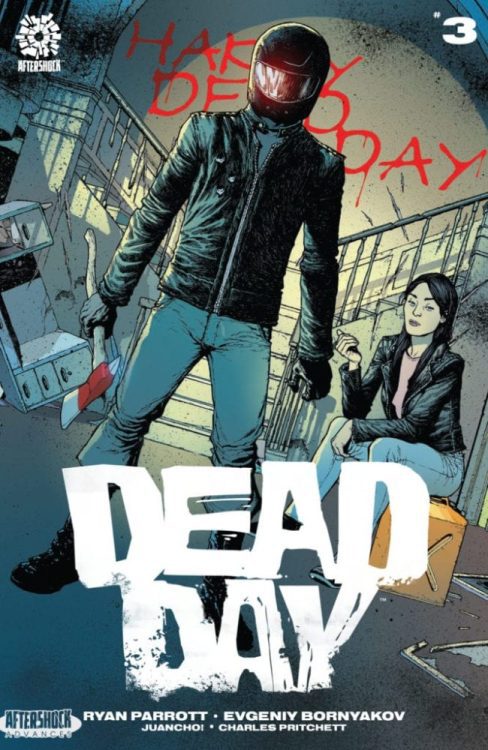
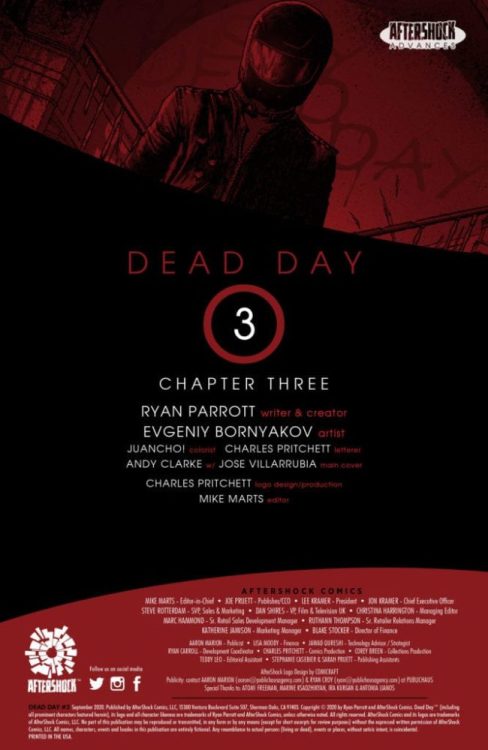
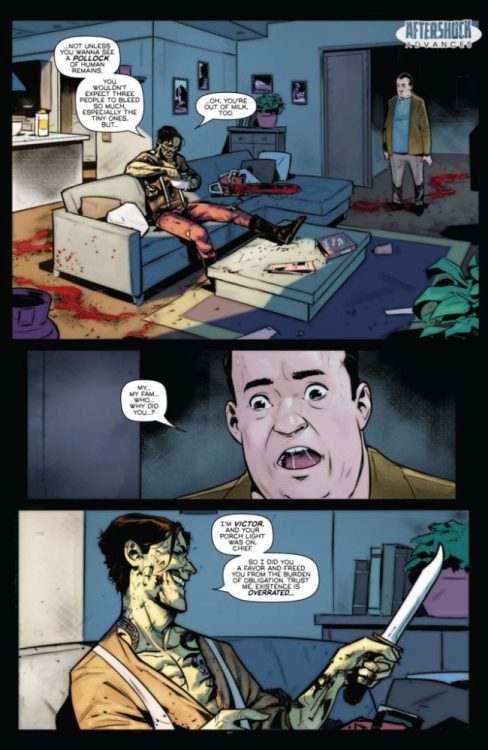
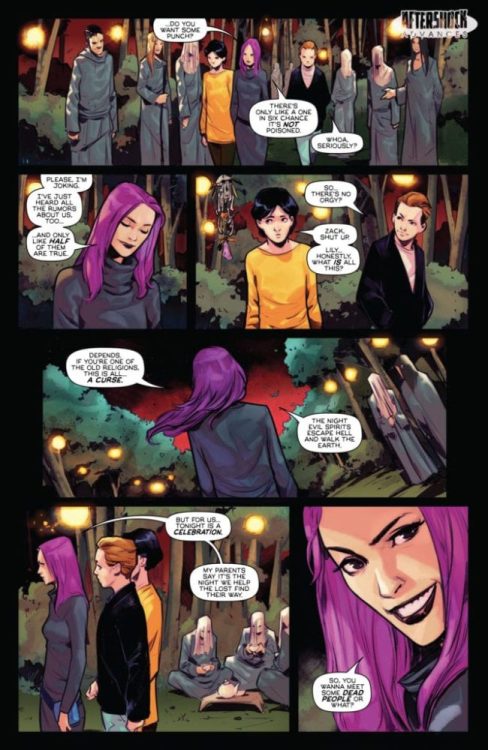
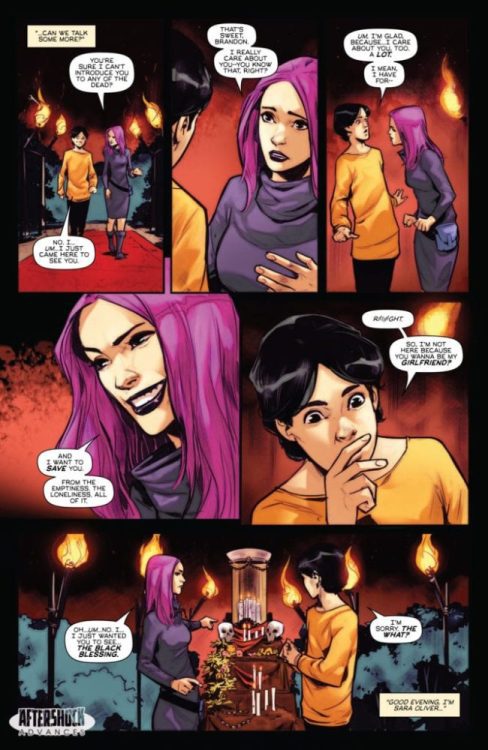
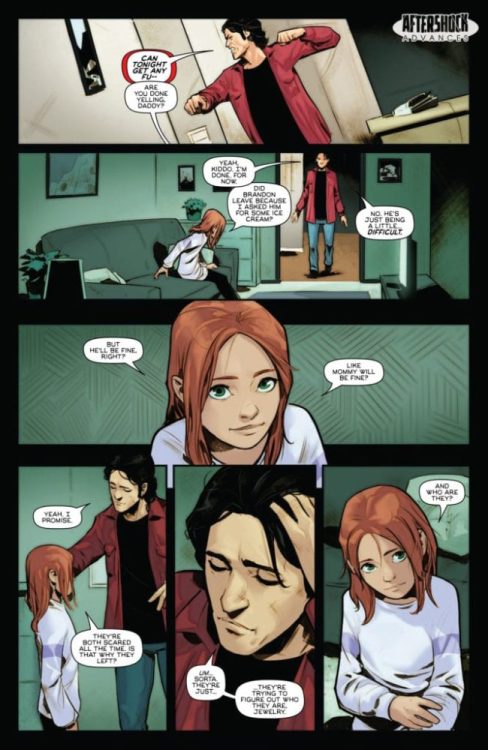
DEAD DAY #3 hits your local comic book store on September 16, but thanks to AfterShock Comics, Monkeys Fighting Robots has an exclusive four-page preview for you.

About the issue:
Jeremy attempts to track down the monster responsible for his murder as well as uncover the terrifying secret behind it. Brandon finds himself amongst the dead and at the heart of the Revivalists’ most sacred ritual.

DEAD DAY #3 is by writer Ryan Parrott and artist Evgeniy Bornyakov, with colors by JUANCHO! and letters by Charles Pritchett. The main cover is by Andy Clarke with Jose Villarrubia.

The series is described as “an unnerving tale of existential horror with grave consequences.”

Check out the DEAD DAY #3 preview below:


Are you reading DEAD DAY from AfterShock Comics? Sound off in the comments!

Monkeys Fighting Robots Youtube

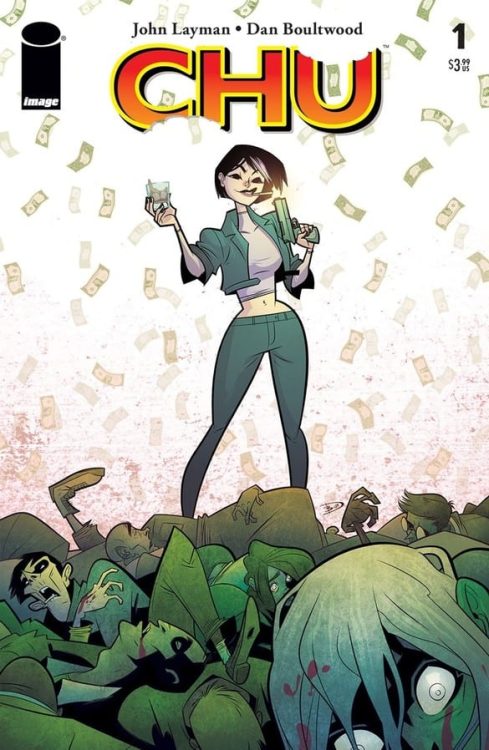
Review: John Layman Comes Back For Seconds in CHU #1

Writer John Layman, writer of the massively acclaimed Chew series, teams up with artist Dan Boultwood to bring readers the first issue of “Chu,” a sequel/companion series to Layman’s original long-running tale of cibopath detectives. Layman’s sharp sense of humor, wit, and plot sensibilities look to have stuck around for this fast-paced blast of an opening chapter. Coupled with Dan Boultwood’s brilliantly cartoony art, “Chu” looks to be a satisfying companion to one of the most acclaimed comics of the past decade.

“THE FIRST COURSE,” Part One TONY CHU is a cibopath, able to get psychic impressions from what he eats. SAFFRON CHU is a cibopars, able to learn secrets from who she eats with. Tony is a cop. Saffron is a criminal. They are brother and sister, and they are on a collision course. Spinning out of the multiple Eisner Award-winning and New York Times bestselling series CHEW comes CHU, a felonious new food noir about cops, crooks, cooks, and clairvoyants.

Writing & Plot

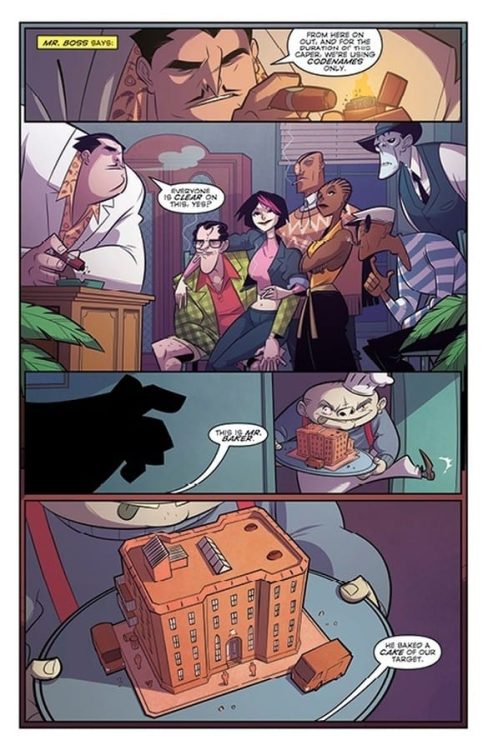
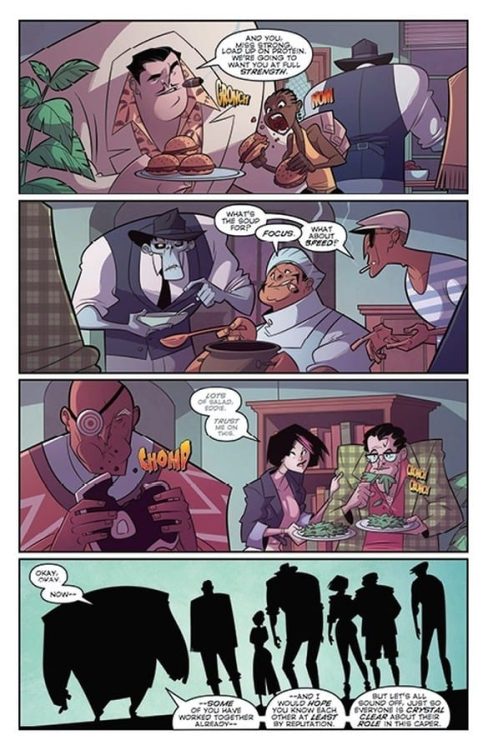
John Layman‘s signature style stays present for “Chu” #1, with an opening chapter that is as absurdly fun as it is chaotic. Saffron Chu, the sister of Chew protagonist Tony Chu, adds not only a neat new power to this uh, “chew-niverse” but a great foil to the plot of the original series. Saffon using her abilities to be a criminal while having to deal with her cop-brother is a great character dynamic that also opens up what can be covered in this world Layman has created. This issue’s opening sequence with Saffron and a motley crew of thieves, as well as the following break-in scene, is a wonderfully goofy start that introduces new readers to the tone of this comic while still feeling very much like a Chew story for returning readers. Layman’s sense of humor and quick pacing make this first issue feel like a mix of an Oceans 11 style heist mixed with a Team Fortress 2 animated short. This first issue is a fast, highly entertaining read that is a welcome treat for both old fans and complete Chew newcomers.

Art Direction

Original  Chew artist Rob Guillory is not an easy man to replace as an artist and visual storyteller. However, “Chu” #1 artist Dan Boultwood serves not as a replacement, but as a new approach to a different take on this comic’s world. Boultwood’s cartoony, exaggerated art style is an absolute joy to behold and is as close to immaculate in execution as such a style can be. The myriad oddities of characters are all detailed in delightfully wacky form, while still being clearly human enough to be settled into the story. Saffron and Tony’s more vanilla designs aren’t a boring choice, as they fit into the more eccentric cast with the reader more ready to interface with them as characters. Boultwood’s action and gore scenes are as lighthearted and goofy as the rest of the book, to the point that when things get even a little bit serious it comes off almost like gallows humor.  The environments in “Chu” look as though they were rendered as animation cells by a studio, and they are perfect for this kind of comic. Boultwood’s colors offer much of what makes this comic look so good, with color gradients dominating pages and sequences to sell the atmosphere. This is brilliant work here by Dan Boultwood, and it’s sure to please any skeptical readers who can’t see this universe without Guillory’s art.

“Chu” #1 is a fast-paced, immensely fun read that returns to the world of John Layman’s  Chew with an opening chapter fit for both old fans and new readers. Layman’s script expands upon the fiction of his original series with a great new character and dynamic, while maintaining his classic sense of humor and plot pacing. Dan Boultwood’s brilliantly high-quality and cartoonish visual work is the perfect style for this comic to be rendered in. Whether you’re a fan of the first series or are just now entering the “Chew-niverse,” this is a stellar first issue to pick up from your local comic shop on 7/22!


Monkeys Fighting Robots Youtube

LIKE FATHER, LIKE DAUGHTER #5: The Plot Thickens With Revelations

Like Father, Like Daughter #5 B Cover

Like Father, Like Daughter #5, available now from Comic Uno is the start of a new arc about a family bonding experience written by Katharyn Calamia, with art by Wayne A. Brown, David Aravena worked on colors, and you will read Matt Bowers letters. After a few issues of building the characters up, it’s finally time for the plot to move forward.

Recap

Like Father, Like Daughter revolves around Casey Ryder and her superhero father, Invulnerable. Casey inherits his powers and tries to get a handle on them while trying to figure out where they come from.

Like Father, Like Daughter #5 Plots

Like Father, Like Daughter #5 is all about revelations that make an impact. The best comes from how Casey reacts to how her father actually lives. Given how camera friendly Invulnerable is, it’s easy to assume superheroes live a high life. But when Casey sees how modest Jim actually is, she can’t help but feel a little bad about everything. Especially when it turns out that what Casey and Invulnerable have got going can be taken away by the origin of Jim’s powers. It turns out Casey and Invulnerable’s powers are in relation to the KGB, and they’re on the move to reclaim Invulnerable. Calamia brings home how much of a threat they are by showing how deep their grasp is. Any further comments would be spoilers.

Art

Like Father, Like Daughter #5 uses Brown’s artistic developments in issue 4 as the default state. The details on the characters from wrinkles to hairstyles look authentic, allowing for extremely expressive features. The few mental situations from Casey’s visions/nightmares look positively surreal; they perfectly encase a dizzy spell that transitions to horror. The same can’t be said for the architecture, which more or less looks very simple with a lot of rectangular buildings. Some of the panels don’t even have backgrounds and just use coloring from Aravena.

Aravena’s colors likewise look rather simple with backgrounds of gradients. This is in stark contrast to the character models whose shading and layering of colors present a fine amount of detail. The fight scene in the dark in particular displays this detail with the little highlights with the action taking place.

If there is one thing to improve upon for future issues, it’s paying attention to small details. In the opening scenes of Like Father, Like Daughter #5, characters speak in Russian, yet the reader could only tell from a black caption box that might be hard to miss for its placement at the bottom left. It would be a lot easier if the word balloons had hyphens or an asterisk to notify a different language. Bowers otherwise does a decent job with word balloons that occasionally embolden with a very broad outline for emotional moments. As well as wordmarks that can fit in the situations that take place, like a stylized font for a broken window.

Like Father, Like Daughter #5 Gets Everybody Ready

If there’s anything to take away from Like Father, Like Daughter #5, it’s that this series isn’t over yet. There is still more to come and hurdles for the characters and creators to leap over. As the plot thickens, the series finds its identity with more room to grow. Now all everyone has to do is prepare themselves for further developments.

Monkeys Fighting Robots Youtube

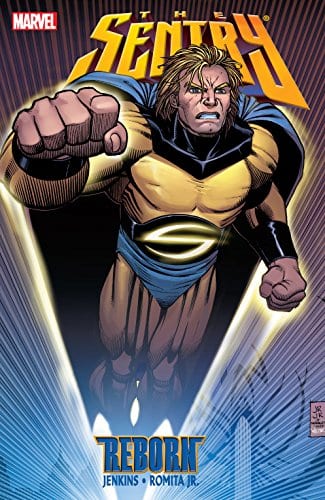
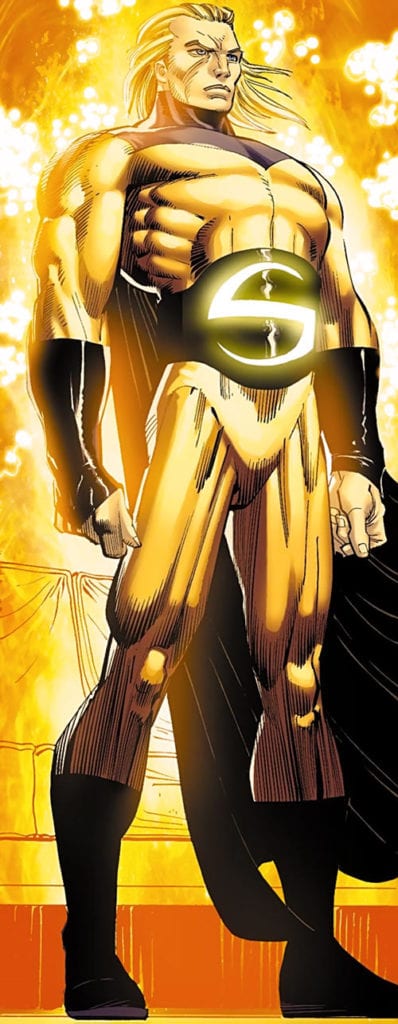
THE SENTRY: REBORN and Perfecting Surprise Reveals

Cover to Sentry #1

The Sentry: Reborn is a wonderful tale about the golden guardian of good that is filled to the brim with twists. Paul Jenkins crafts together the limited series with three techniques that make each reveal have a profound impact on the reader.

The Sentry

About the book:
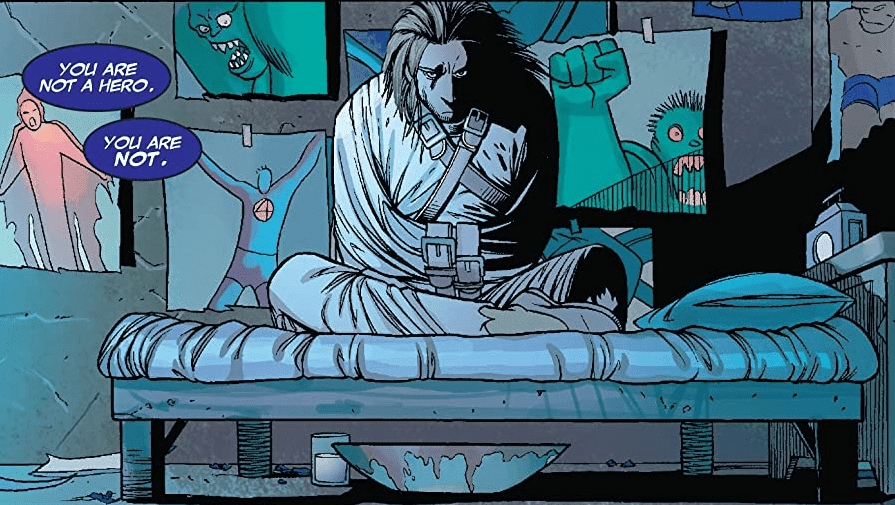
Written by Paul Jenkins and illustrated by John Romita Jr. The Sentry: Reborn is a must-read for fans of the mighty hero. Often called one of the most powerful heroes in the Marvel Universe, Sentry has a vast arsenal of powers, but is handicapped by his schizophrenia. This can result in Sentry being a danger to others, which is why many heroes in the Marvel Universe are concerned about him. The storytelling in The Sentry: Reborn is beautifully crafted to always keep the reader turning the page, and the art is incredibly expressive.

Three main tactics are utilized by Jenkins to ensure the surprise reveals in the series have a strong impact on the readers, and these simple techniques yield amazing results that make The Sentry: Reborn a truly wonderful reading experience.

The Sentry wearing a straight jacket

Withholding Information

One of the key elements of a twist is withholding the correct amount of information. A sudden twist where no information was revealed beforehand feels cheap and undeserved, while too much information can result in the twist being unsurprising. The Sentry: Reborn is able to reach a perfect balance of this thanks to the writing of Jenkins. For example, the relationship between Sentry and his archenemy, the Void, is talked about many times before the true nature of their connection is revealed. It is clear there is a link between the two, but it is unspecified, and the reader is left to wonder what their true connection is. In talks between Void and Sentry, there are many implications of what their relationship might be, but some of this information conflicts with other information, leaving the reader to try and piece the puzzle together.

Subtle Foreshadowing

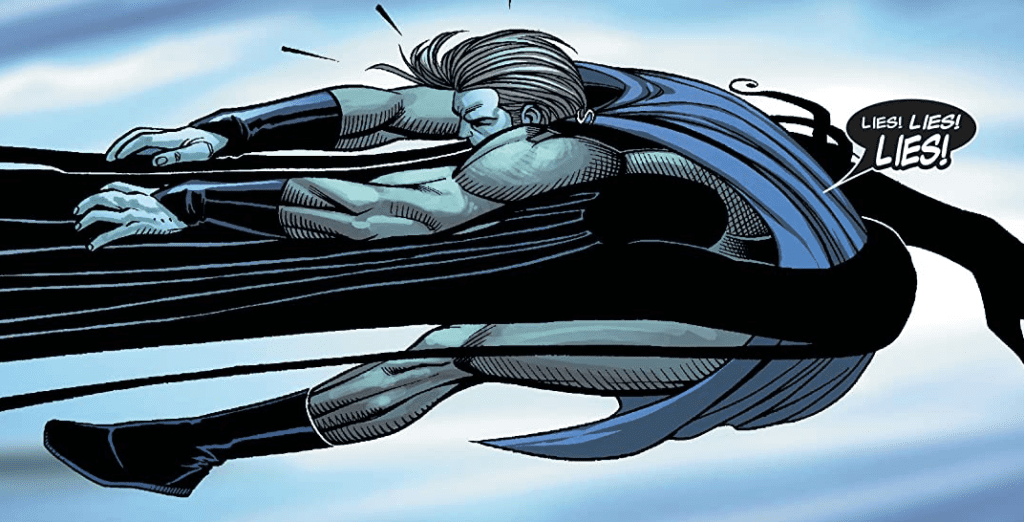
Along with withholding information, subtle foreshadowing prevents the reader from feeling cheated when the reveal is presented. Every clue was there, waiting to be discovered, but more likely than not the surprise still catches the reader off-guard. This does mean that the reader may be able to piece together the reveal before intended, but they are then able to enjoy an affirmation of their theory when it is revealed. A prime example of this would be when the Hulk and the Sentry enter the negative zone and find the Void, despite him being supposedly locked up in a cell that the Sentry watches over. This is a major indication that everything is not as it seems, and is a key component the reader could use to figure out the upcoming reveal, but more likely the reader will be shocked when they are told how this event occurred.

The Sentry fighting The Void

Misinformation

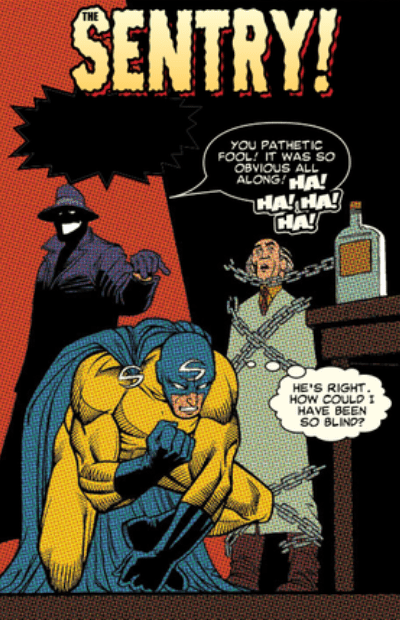
The third and final way that Jenkins is able to create fantastic surprise reveals is through the use of misinformation. The story follows the Sentry, who has schizophrenia. Due to him being the main character with this mental disorder, the reader is aware that some of what they are seeing might not be reality, but instead are delusions held by the main character. Jenkins uses this multiple times throughout the series, in events such as flashbacks to Sentry’s origin. The audience is already inclined to believe that these events are not always as they seem because of the silver age comic book art style that they are portrayed in. This knowledge that the events shown to them are through a lens leads the audience to question what really occurred, but they can never know until Jenkins decides to reveal it. Sentry’s mental disorder allows for a natural way for the audience to be deceived, which causes the surprise reveals to have a much more profound impact than they would have otherwise.

The Sentry in Silver Age Style

Conclusion

The Sentry: Reborn is a fantastic story that does not require any prior knowledge before reading, and is an excellent choice for new and old fans of comic books alike. The writing of Jenkins is sure to delight anyone who decides to read it, and the art of John Romita Jr. is a beautiful complement to it.


Are there other twists in comic books that have caught you off-guard? Let me know in the comments below!

Monkeys Fighting Robots Youtube

OP-ED: REIGN OF THE SUPERMEN: False Supermen and Jesus Christ

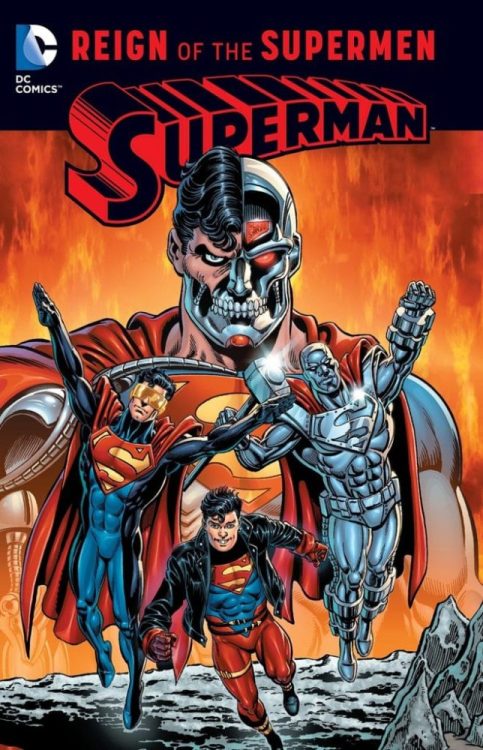
reign of the supermen

A man dies for the fate of the world, is mourned by his followers, and is laid to rest. He carried the weight of truth and justice on his shoulders, and with him gone, the world seems to be a much darker place. But soon after, when two women visit his tomb, they find it empty. His body is gone. The tomb is empty. Sound familiar? It should; it’s the events of The Death of Superman and Funeral for a Friend.

JEsus DC Superman

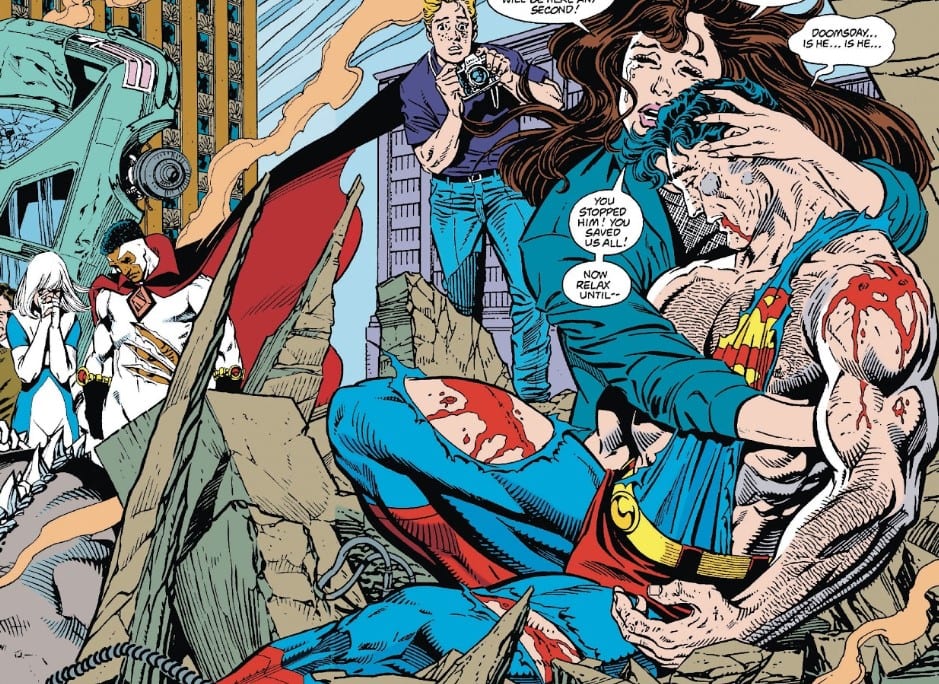
When Superman “died” in 1993, a story covered over multiple titles, the comparisons to him and Jesus Christ were pretty hard to miss. The writers of each series were, in a way, telling their own version of the Gospel. Superman was their Jesus. The comparisons were thought-provoking, for sure, though occasionally a little clumsy. The writers would throw a reimagined pieta (an image of Mary holding Jesus’ dead body) in every once in a while to remind readers that there were Biblical influences at play. Biblical references and imagery fill every page. Yet, in the Death and Return of Superman arc, this “Superman = Jesus” schtick found its footing when it seemed to go a little off-book.

Reign of the Supermen vs. The Gospels

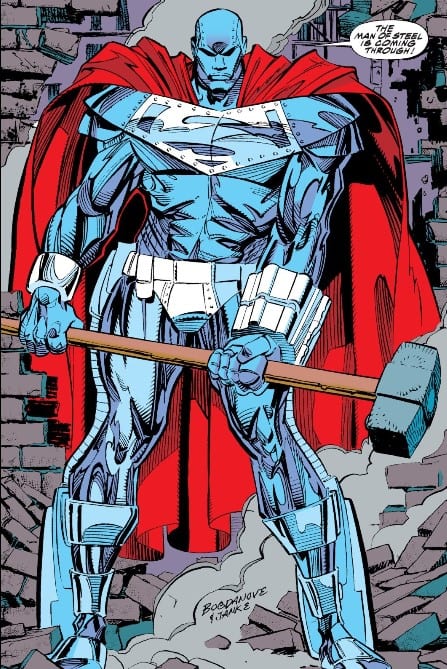
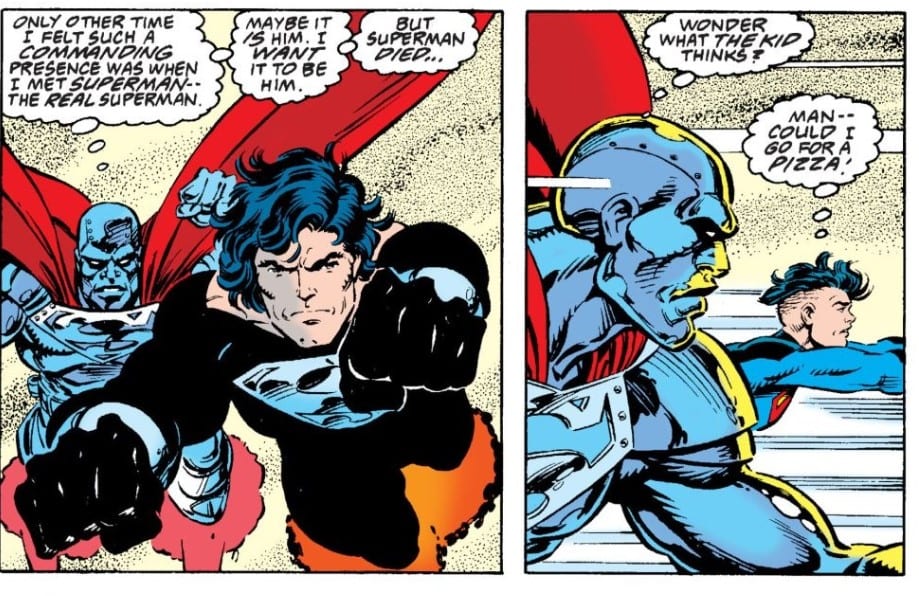
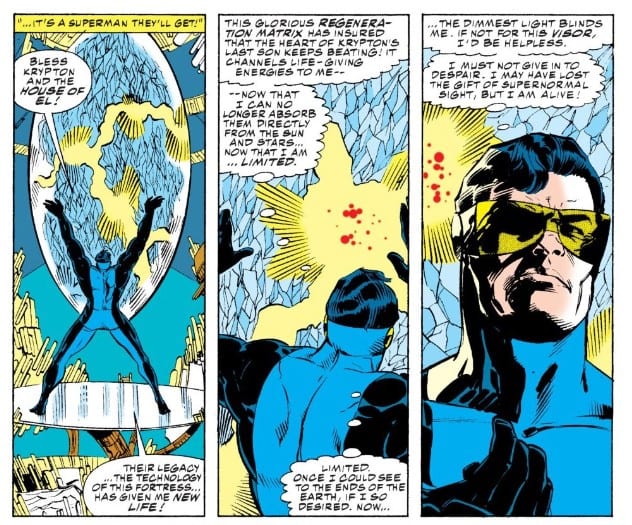
In Reign of the Supermen, we are met with a Metropolis that is very unsure of itself. Superman’s body has gone missing, and worse yet, four new Supermen have shown up. Each of them seems to claim they are Superman back from the dead. They each embody an aspect of Superman’s life and who he was. The Last Son of Krypton, one of the four Supermen, is firmly connected to Kal El’s home planet. Another, Cyborg Superman, is deeply entwined with the government of the country Superman loved. Superboy, though he prefers the moniker SuperMAN, reminds us of the flesh and blood behind the cape. And finally, the Man of Steel fights for his neighborhood and seeks to serve and make up for his past mistakes. In some ways, these are parts of Superman, but not the whole man. An incomplete picture.

That’s all fine and dandy, but what’s it have to do with Jesus? To those familiar with the gospels, you’ll know that after Jesus died, four Jesuses didn’t pop up out of the blue. However, four authors did tell Jesus’ story. In the gospels of Matthew, Mark, Luke, and John. And just like each Superman shows a part of who people expect Superman to be, the gospels show us a different side to Jesus, and some of the expectations the people had for who the Messiah ought to be.

Gospel of Matthew / Cyborg Superman: King

Jesus Superman DC

The Gospel of Matthew was written to the Jewish people. The author wrote it right after the Romans had destroyed Jerusalem. It dealt with the concept of Jesus as a kind of king. The Jewish people were expecting someone to come in and overthrow the oppressive Roman regime. Jesus didn’t overthrow the Romans (see: destruction of Jerusalem by the Romans, long after Jesus’ death). But Jesus wasn’t a king in the traditional sense. Matthew’s Jesus rejected traditional leadership roles and chose to be a leader and king by serving and loving the disenfranchised.

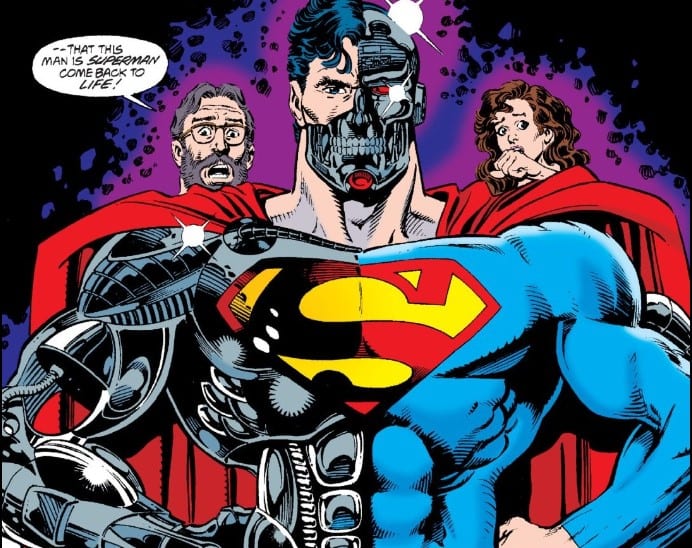
Enter Cyborg Superman. Cyborg Superman is perhaps the character with the most promise, the most riding on his shoulders. Scientists even scan Cyborg Superman and confirm that he’s Superman, back from the dead. This kind of “confirmation” doesn’t happen for any of the other characters. But he embodies a controversial side of Superman’s personality.

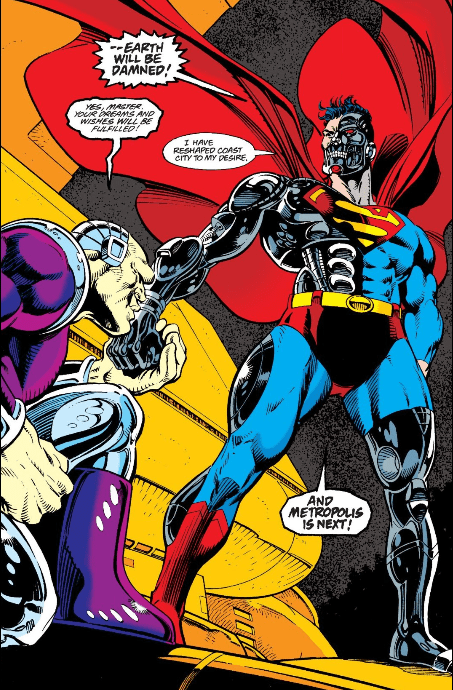
Cyborg Superman is the government’s lackey. Or at least, he wants them to think that. He gives the president a two-way radio so they can always be in contact. He isn’t here to overthrow any government (well he is, but that comes later) he is here to weasel his way into government. Ultimately, it’s because he wants to be king of the world. He is a bastardized version of both Superman and Jesus. Cyborg Superman represents not only selling out but an insatiable desire for power and authority, which ultimately leads to both his destruction and the destruction of Coast City. He flies in the face of Matthew’s Jesus by embracing traditional leadership forms and seeking to be the one person who answers to no one. In a way, he reminds us of who Matthew’s Jesus was by being the twisted opposite, just as he’s Superman’s twisted opposite.

Gospel of Mark / Man of Steel: Servant

The Gospel of Mark was written to a community of Gentile Christians that was undergoing persecution. It was a message to a downtrodden people group that was at the bottom of the totem pole. Romans were killing them for entertainment. Their lives meant nothing to the society where they lived. It was a message to remind them that the underdogs are the ones who win in the Kingdom of Heaven. While they may suffer, it is for a greater cause. And in Heaven, it’s the servants who are the true leaders.

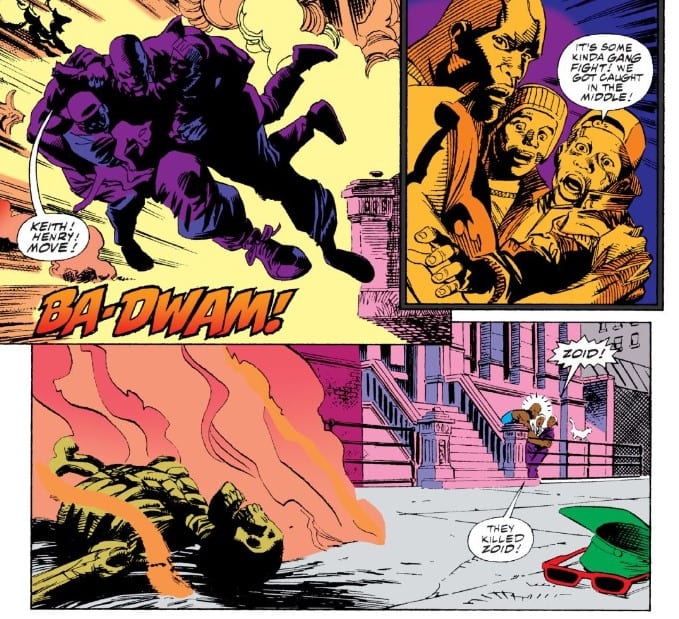
And so, enter the Man of Steel. John Henry Irons, the Man of Steel, is a black man from a rough neighborhood in Metropolis. Metropolis at large seems undisturbed by the plight of Steel’s neighborhood. They are at the bottom of the totem pole, and the city treats their lives like they don’t matter. Right as the Man of Steel is first introduced, we see a young black boy gunned down in the streets. It just happens, with no clear reason for why. Steel, with the weight of his community on his shoulders, seeks retribution for this boy’s death and wants to eradicate the dangerous weapons that made the killing possible. He wants to serve his neighborhood, keep it safe.

Steel is the one who invented the weapons that are killing his neighbors; we later find out. Toastmasters, big otherworldly guns that fry their victims, were his brainchild. It’s interesting then, dealing with Irons as a character. He’s both the savior of his people and the author of their persecution. Surely the Gentile population was dealing with a similar dilemma. They loved Jesus, he was their savior, but it’s for that very love that they were being persecuted and killed.

The Gospel of Luke / Superboy: Man

The part of Jesus we find in the Gospel of Luke is a very human part. Luke is the only one to go into much detail about Jesus’ birth and moments as a child. Luke’s purpose was to remind readers Jesus was a man. Jesus had flesh and blood. Jesus slept, ate, and wept. And he was deeply concerned with the natural world, not just focused on the heavenly one.

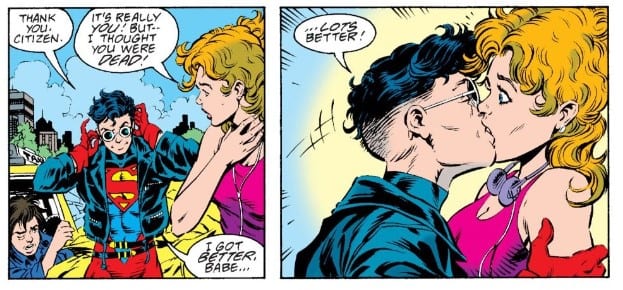
“Heavenly minded” isn’t the first thing to come to mind when talking about Superboy. In fact, most of the jokes in this series are about how incredibly human he is. He’s always either thinking about food or sex. Even when he’s out there trying to save the world, he’s thinking about where he can grab a bite to eat. Ironically, Superboy is always insisting on being called SuperMAN, because he’s the one who is the closest to seeming like a real man.

Superboy lets his libido and stomach make a lot of his decisions for him. He becomes a hero over time, but it’s a process. Yet, it’s pretty hard not to kind of like him. He’s the underdog. People wonder if any of the other three are really Superman, but they know he’s just Superman’s little clone. But his humanity connects him to the people he protects. Luke’s Jesus connected deeply with humanity. He even invited himself to dinner at Zacchaeus’ house. It’s over meals that we see Luke’s Jesus connect with the people around him, and it’s through food that we’re constantly reminded how mortal Superboy is.

The Gospel of John / Last Son of Krypton: God

The Gospel of John is actually more controversial than you’d probably think. Some scholars have even gone so far as to call it the “anti-semitic” Gospel. Hitler himself claimed to be a fan of John’s Gospel, making his own heavily-altered version of it into anti-Jewish propaganda. John claimed in his Gospel that the Jewish people hadn’t recognized their savior, and instead killed him. And so, through their inability to recognize God among them, Jesus opened the door to all people groups to be saved.

The Last Son of Krypton certainly never said anything anti-semitic, but he does have an intense focus on the Kryptonian way. He seems to believe Kryptonians are the superior race. One wonders if, given the power, he would remake the world in Krypton’s image. It’s something worth wondering since he turns out to be the “Eradicator,” a machine created by a rogue bunch of Kryptonians to preserve the Kryptonian way and turn any planet it finds into the new Krypton.

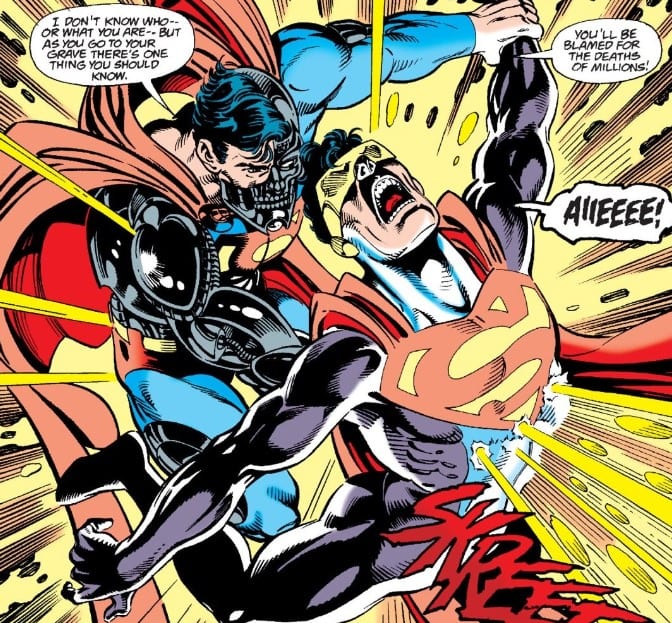
But the genuinely haunting moment of Eradicator’s timeline is in Superman: The Return, when he and Cyborg Superman investigate a dead spot in satellite imagery for the government. Cyborg Superman, with a two-way radio to the president, suddenly claims Eradicator has turned on him. When Eradicator turns around, confused, he’s shot by the Cyborg. As Cyborg Superman grabs him, and bombs planted all around Coast City begin to explode, he simply says to the Eradicator, “As you go to your grave, there’s one thing you should know. You’ll be blamed for the death of millions.”

It’s a small moment. But it reminds us that even the most celebrated stories can be twisted out of all recognition by the wrong hands.

Finding Their Gospel

The first couple volumes of Superman’s death and return series are alright. But their use of Biblical imagery seems to just be there, rather than adding to the story or interpretation. But when four Supermen come out of the blue, we see four people try and tell the story of who they think Superman is. Is he a king, a servant, a man, or a god?

It’s a story about how one man’s life had so much impact. One exploration into who he was wasn’t enough. And so the creative team behind this arc found their footing in Reign of the Supermen. Their nods to Scripture go from decorative to deeply thought-provoking. It suddenly becomes about a man who represented so much to people. The question is, who is Superman? The answer is given four times from four different perspectives. And with that, this creative team presents a set of gospels inspired by Superman.

Monkeys Fighting Robots Youtube

Review: The Horrors Of War On Full Display In Monstress #29

Monstress #29, Takeda cover

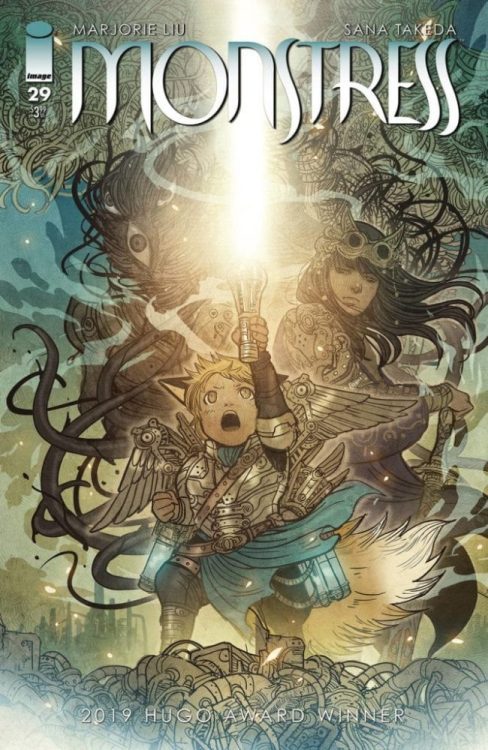
Monstress #29, available from Image Comics on July 22nd, recounts the siege Ravenna between the warring factions of humans and magical folk as the walls fall. Marjorie Liu’s story pulls no punches in portraying a grimy, violent battle where strategy wins the day but at a substantial cost.

Cover Art

Sana Takeda’s cover is beautiful enough and epic enough to be a movie poster. Kippa, the Arcanic fox girl, holds a powerful flashlight aloft to light the way for the coming battle. Takeda shrouds Kippa’s background with Maika’s dual personality, constantly fighting to resist Zinn’s possession. Symbolically, Kippa’s sword could also represent her desire to cleave Zinn from Maika rather than being forced to destroy her.

Writing

Liu’s story is heart-wrenching and difficult. Starting with the problematic part, Liu infuses so many individual characters with a battle happening on multiple fronts (five by my count) that it was difficult to keep track of who was where. Difficult but not impossible, and after various readings, you get a more definite sense of the battle flow and an appreciation for Liu’s strategy in weaving all the storylines together. And to Liu’s credit, the complexity adds a layer of realism that refuses to sugarcoat war as anything but messy and chaotic.

Heart-wrenching best describes the theme and tone of Liu’s story. Every leader is fighting what they believe to be a desperate and lost battle, and the carnage is not in any way sanitized. There’s a particular series of panels where individual soldiers prepare and most of their courage in battle, but their memory is immediately followed, but their depiction of death and mutilation. It’s a hammer blow statement on how bravado means nothing when half your limbs are blown off, and you’re just sitting there in shock, bleeding.

Pencils/inks

Takeda’s art is appropriately grim for the subject matter. The entire atmosphere of the book is covered in smokey greys to give the impression of dust and smoke. The only touches of brightness come from explosions of mortar shells and cannon fire. The art weighs on you oppressively. So much so that you can practically feel the need to cough and rub the sulfurous smoke from your eyes.

The most impactful element of Takeda’s art is the unapologetic carnage. There are no clean Hollywood style deaths in this battle. Soldiers and civilians die in clumsy and brutal ways; crushed under falling debris, burst apart by exploding munition, hacked limbless by an opponent’s blade. It’s shocking in its brutality without coming across as gratuitous. This is art that shows an ugly side of life and makes no apologies for doing so.

Coloring

Takeda’s coloring, especially in the use of greys, is well balanced. Every panel is viewed through the haze of girt and dirt created by the layers of dark colors but not so much as to overpower the drawings. The characters remain sharp as if viewing the battle through a dirty window. It’s a great example using color to create an atmosphere without taking away from the designs underneath.

Lettering

With so much haze, smoke, and shadow, Rus Wooton does a commendable job of using bold white lettering to make the sound effects stand out. The white is bold enough to be seen through the grime but no so bright as to become a distraction. It’s clean and clear lettering that punctuates the sound through the smoke while still fitting organically into the art.

Conclusion

Monstress #29, available from Image Comics on July 22nd, is a tough read for the sheer weight and brutality of the subject matter. However, it’s beautifully artistic in its execution. The story is complex and human, and the art is high quality for its fearless depiction of war.

[Update: The description of the cover art was corrected to reflect that Kippa is holding  flashlight; not a sword.]

Monkeys Fighting Robots Youtube

Review: TRANSFORMERS #21 Is Unbalanced And Unfocused

Transformers

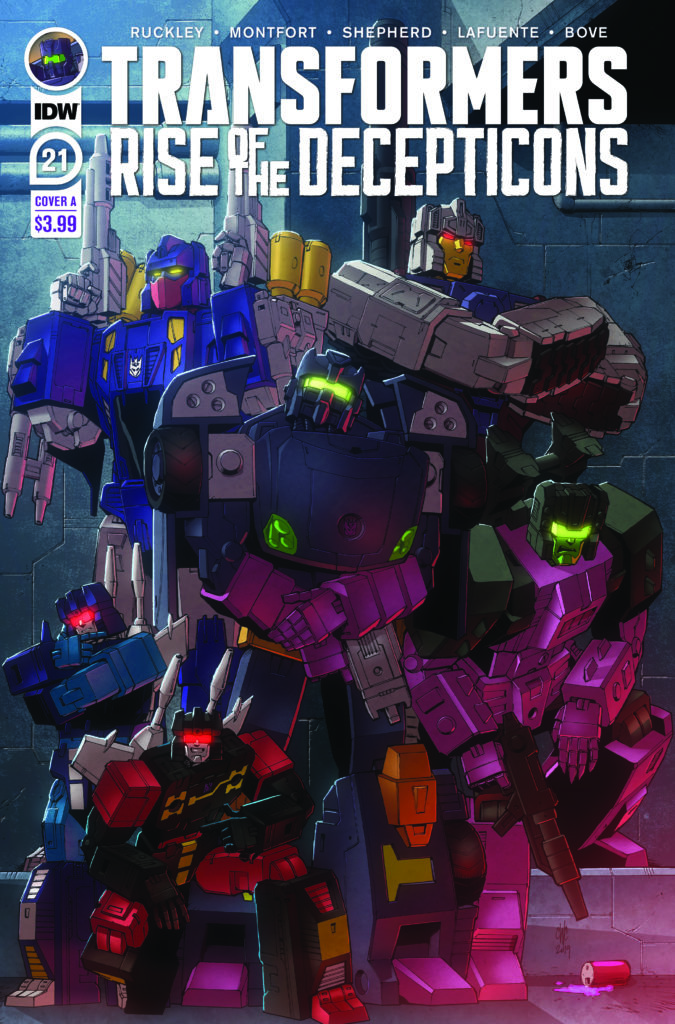
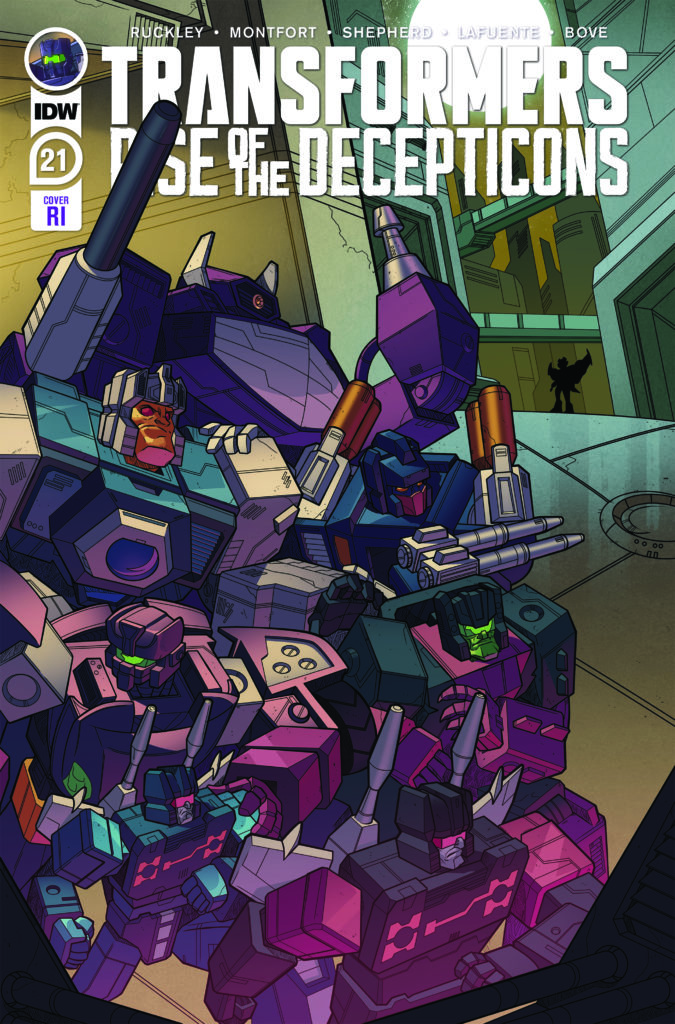
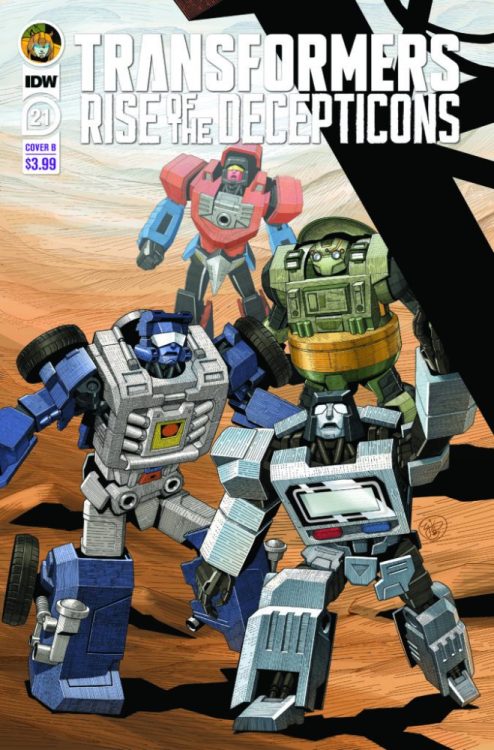
The rise of the Decepticons continues in Transformers #21 by Brian Ruckley, Bille Montwort, Blacky Shepherd, Joana LaFuente, John-Pual Bove, and Jake M. Wood but it feels uneven. The groundwork has been laid for the revolution everyone knows if coming. A major change needs to occur to truly get this series on track.

Summary

There are certain members of the Rise that if captured by Security Operations, would be bad news for both sides.

Transformers

Writing

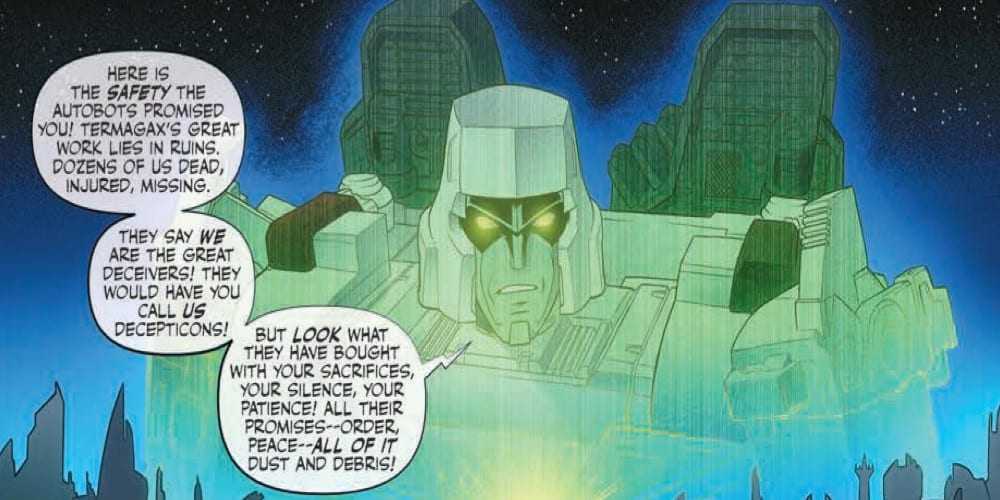
The issue opens well with Megatron stroking the fires of dissension. Pushing the entire planet closer to a civil war with the potential to rip the entire planet apart. This point has been made already, why must it be reiterated repeatedly? The fragile state of the society and the entire social structure of the planet have been laid out. Get on with it!

The second half of the issue is where things go downhill. The capture of Quake and Rumble who are wanted for murder has been built up as being the turning point to start the war. This would have been a great trigger for writer Brian Ruckely to move forward with the civil war…if it happened four issues previously. The murder of Brainstorm which started the fall of society and the Rise of the Decepticons happened in the first issue. Resolve this plot point and move on. Also, while on the topic of bad ideas, why bring in Azimuth? For those who didn’t use the internet to find out who this character is, he’s the Transformer who turned into the wristwatch. With the hundreds of characters to use to tell stories, why use one no one has heard about?

Transformers

Artwork

The pencils and inks are uneven as the story but it isn’t as much of a negative. The work by Bille Montwort and Blacky Shepherd has a more detailed look for the scenes in the city and more plain for the ones in the wasteland. This juxtaposition is noticeable but fits properly with the settings they are representing.

The colorwork by Joana Lafuente and Jon-Paul Bove offers a perfect level of detail between the wastelands and the city. When in the city, the color adds a level of sharpness and helps the characters to stand out against the dry atmosphere of the wasteland. There also is a nice level of shading and gradients to help as the transformation sequences occur in the same frame.

Transformers

With the lettering by Jake M. Wood continues to showcase a fantastic ability to meld the sound effects with the scenery. Many times the words blend perfectly to the art adding to the experience instead of distracting from it. Wood could give pointers to others in the business with this continued level of quality.

Conclusion

Transformers #21 proves the plot point of the fugitives whose actions helped move the revolution forward has lost its power. It would be ill-advised if the next step was some kind of trial or anything else to extend this plot. Shift towards the civil war and don’t look back. The readers will thank you for it.

Monkeys Fighting Robots Youtube