


From writer Si Spurrier and artist Matias Bergara, the minds behind Coda and John Constantine: Hellblazer, comes a new tale of teenage frustration, the magic of dreams, and the power of words in A Mischief of Magpies #1. Featuring additional color art by Kike J. Diaz and lettering from Hassan Otsmane-Elhaou, this opening issue is a wondrous blend of genuine human emotion and wholly unique fantasy. With a brilliantly complex script and incredibly inventive artwork, A Mischief of Magpies is easily one of the most impressive debut comics of the year.
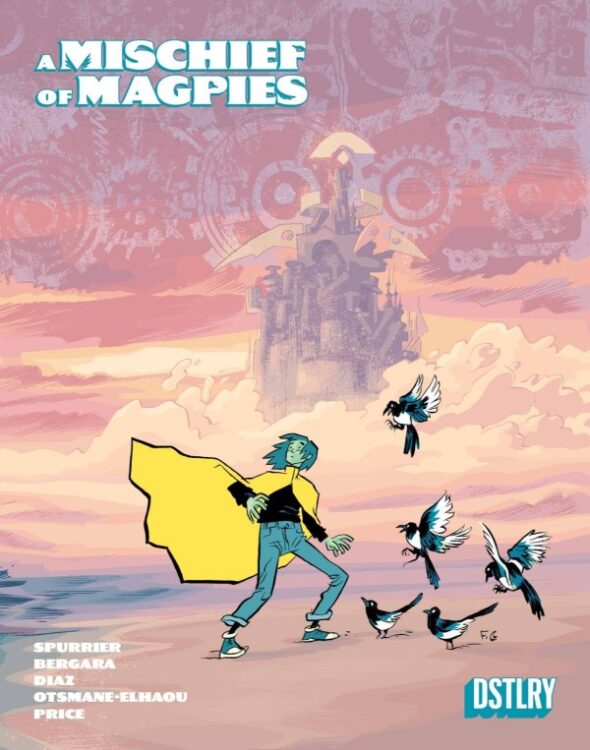
“Mar has a secret. Sometimes, without warning, he falls out of the world. This would be an inconvenience if his life wasn’t already such a drag. When he’s gone, he finds himself in an extraordinary city. A city which is also a machine, endlessly crossing a shoreless ocean. A city of two halves: the bright, bustling spires above the waves, and the beast-haunted twilight halls below. And between, clowning along the rusting beach, a troupe of anarchic magpies with all the answers but none of the questions.”
Writing & Plot
Si Spurrer pens the beginning stages of a tale both tragic and wondrous in the pages of A Mischief of Magpies #1. Mar, our story’s protagonist, has something of a gift with words. His parents give him a journal at a young age, and as he gets older he writes his observations and his dreamy experiences – much to the chagrin and confusion of his teachers and parents. He feels like he is gazing into another world through his waking dreams, until one day he finally breaks through. He finds himself a celebrated hero of a strange world of fantasy and magical words, walking cities and snarky magpies, and so this is where the story really begins. To capture the duality of Mar’s life, Spurrier crafts two parallel styles of storytelling. Much of the comic comes in the form of Mar’s journal entries, with paragraph’s of detailed prose describing what is going on in his adolescent life. Spurrier does a fantastic job of shifting from an unusually insightful toddler to a lonely teenager living an existence that is so alien to those around him. These sequences do make for a lot of words and straight reading for a comic book, but Spurrier’s prose pulls the reader along with how well-formed his work here is. Every sentence is written with such insight and humanity that none of the writing ever feels like it’s dragging. The other world Mar winds up in has a completely different tone, and *many* different styles of writing. Firstly, there’s a sort of Shakespearean element to both how the characters in this world talk and how the world itself feels. There’s a nod to A Midsummer Night’s Dream made in the book, and that feels like an apt comparison at points. The real highlights here include the mechanical yet oddly poetic speech of the walking city’s computer brain, the desperate and lamenting woes of this new world’s dark antagonist, and of course the magpies themselves. The last of these are pure sardonic Spurrier goodness, with hits of wit and humor placed alongside sage wisdom. Every aspect of Spurrier’s script in this opening issue is memorable, and it’s another reminder as to why he’s one of the most acclaimed writers in the industry today.
Art Direction
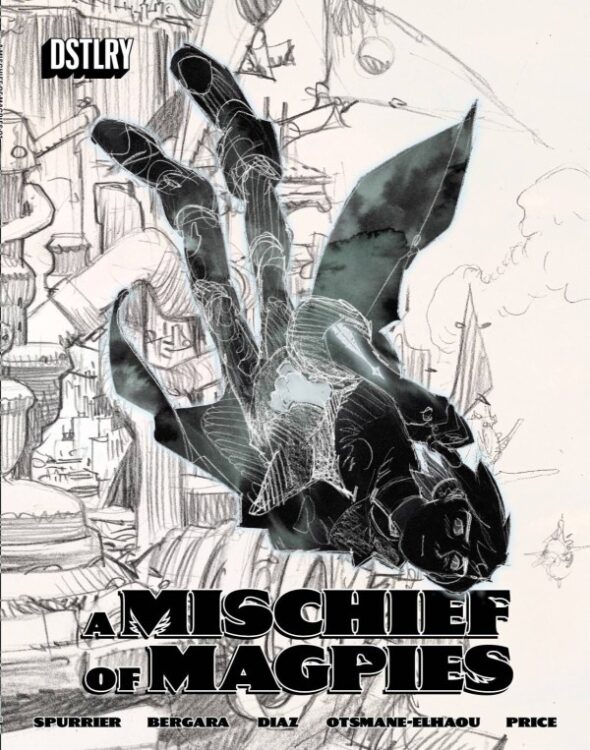
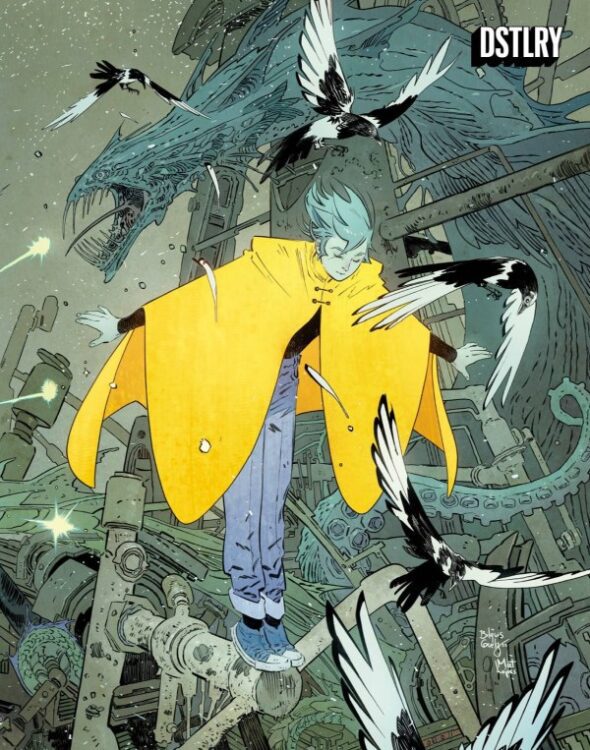
While Spurrier’s scripting is the beating heart of this comic, A Mischief of Magpies is made so memorable due to the incredible visual work of Matias Bergara & Co. Bergara’s unmistakable pencils give this opening issue a dreamlike presence that works hand-in-hand with Spurrier’s written component. The journal entries that make up so much of this comic are framed by creative illustrative work, with Bergara giving face to some of the people and places Mar is describing. From rough sketches of his teachers to visual represntations of his emotional state, Bergara creates a stunning visual element to add even more weight to these passages. Bergara’s visual direction in these sequences is astonishing as well, with the, often blending into the journal to illustrate the notion of Mar falling in and out of this separate reality. Much like with Sourrier’s script, Bergara’s art shifts when Mar finally reaches the Machine City in this new realm. Fans of Coda will definitely recognize the sort of fantastical work on display here, with Bergara’s thin linework bringing this magical realm and its strange variety of denizens to life with a series of unique designs. Again, Bergaga’s sequential direction remains a key component for this book’s success. Even during these more conventional sequences, there’s still this feeling that Mar is falling in and out of a waking dream. How Bergara lines up his visuals with Spurrier’s story perfectly captures this feeling. His color art is also a huge reason for this feeling. Assisted by Kike J. Diaz, the color usage on display here ranges from bombastic and energetic to mournful and foreboding. Mar’s journal stays largely monotone until those moments of dreamtime come in, where sudden splashes of inky blacks and purples take us to the strange realm where the other reality’s antagonist awaits. The walking city itself, and the cavernous water beneath it, are visuals feasts of rich color art. Bright rays of sun reflect off of the opulent garb of the city’s residents, and the dark depths of the sea are filled with a black haze that matches the awaiting creature’s appearance. Perhaps the greatest feat in this comic’s reading experience is the lettering of Hassan Otsmane-Elhaou. Every aspect of the now-veteran letterer’s work in A Mischief of Magpies is wildly impressive, but it’s his work on Mar’s journal that really sells the experience. He starts out Mar’s writing as a toddler by mimicking a toddler’s massy, almost illegible handwriting. He then steadly transforms that approach as Mar gets older, to fonts that are obviously more practiced – arguably a bit *too* practiced for a normal teenager. This again captures the alienation that Mar feels. His work within the conventional word balloons is also stellar, with his fonts shifting wildly from character to character, oftentimes completely leaving conventional lettering structure behind. Every aspect of the visual work in A Mischief of Magpies is an utterly masterful sight to behold.
Verdict
A Mischief of Magpies #1 is an incredible work of comics creativity, experimenting with the form of comics storytelling itself. Si Spurrier’s script is a wondrous mix of human tragedy, alienation, and fantastical wonder, all fused with the British writer’s now trademark sense of thematic weight and wit. The visuals from Matias Bergara, Kike J. Diaz, and Hassan Otsmane-Elhaou are an astonishing mix of shifting styles that pull the reader into this tale of waking dreams and dual realities with ease. Be sure to keep an eye out for this debut issue before it hits shelves in July!
