


From renowned concept artist Ben Mauro and publisher Read Only Memory comes Huxley and the recently released Huxley: The Oracle. These two stunning hardcovers are the first two releases in Mauro’s expanding science fiction universe, taking place in a used future after a great war against machines has taken place.
I recently got to sit down with Mauro to talk about his creative approach and his influences in taking this creative journey.
MFR: It’s plainly obvious that Huxley has been a project long in the making. Where exactly did this universe begin, and how have you changed your approach to its creation as time has passed?
MAURO: HUXLEY began with the original drawing of the yellow robot ‘Huxley’ back in 2014 or so, and slowly grew from there over the years. It started as that original drawing, and it got me thinking about who that character was, what world he lived in, what his story was, and who else would be with him in that world. A lot of this early writing and development happened with the intent of working on it full-time, but it turned out to be harder than I thought; another job always came up and delayed things. So I just decided to start on it and do both at the same time, finding an hour here, a few minutes there to chip away slowly on pages, and before long, I had 5 pages done, then 15, and so on. Some of the original style and drawings date back to college, and one of the small robots walking around in the original graphic novel was from around 2008. The style was there early on, but it didn’t come together until later when I drew Huxley. Early on, it was very design-driven, trying to see how all the characters would look and make sure it all felt cohesive. As the universe matured, I became more intentional about story arcs, character motivations, and long-term continuity. Now that I am diving into prequels and have more of a team with me, things have changed a lot. Planning the next few books for the first trilogy of stories and getting them out the door in the next few years takes up a lot of my time
right now.
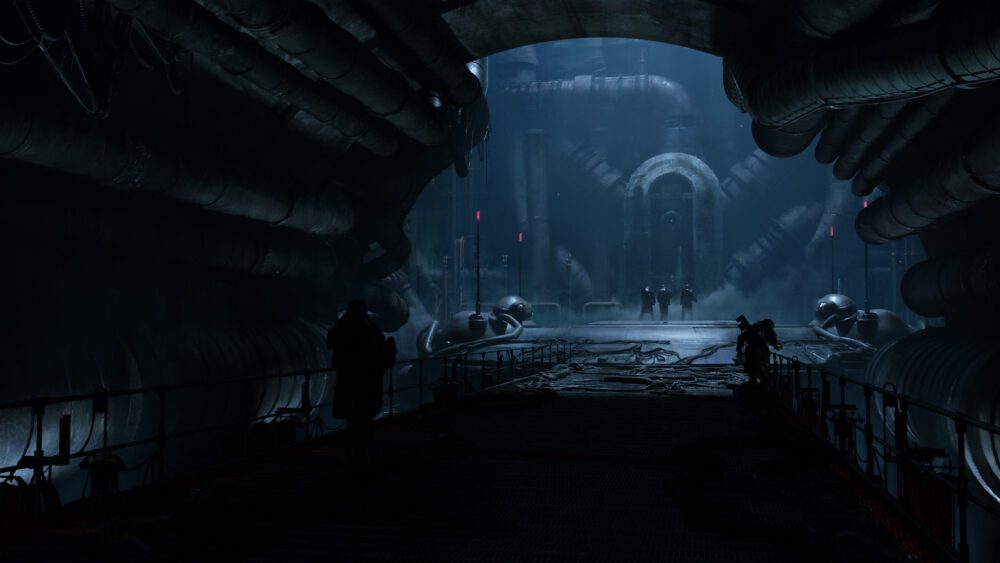
MFR: The original Huxley story lives as a comic book-style graphic novel, while The Oracle is more of an illustrated story. What made you decide on the change in format?
MAURO: The format change was intentional, driven by the story’s needs and a desire to reach different audiences as the IP expands. The original HUXLEY graphic novel is much more of an Euro-style graphic novel, mixed with Japanese manga, in a way, something for fans of Metabarons, Heavy Metal, Moebius, Ghost in the Shell, Akira, and others.
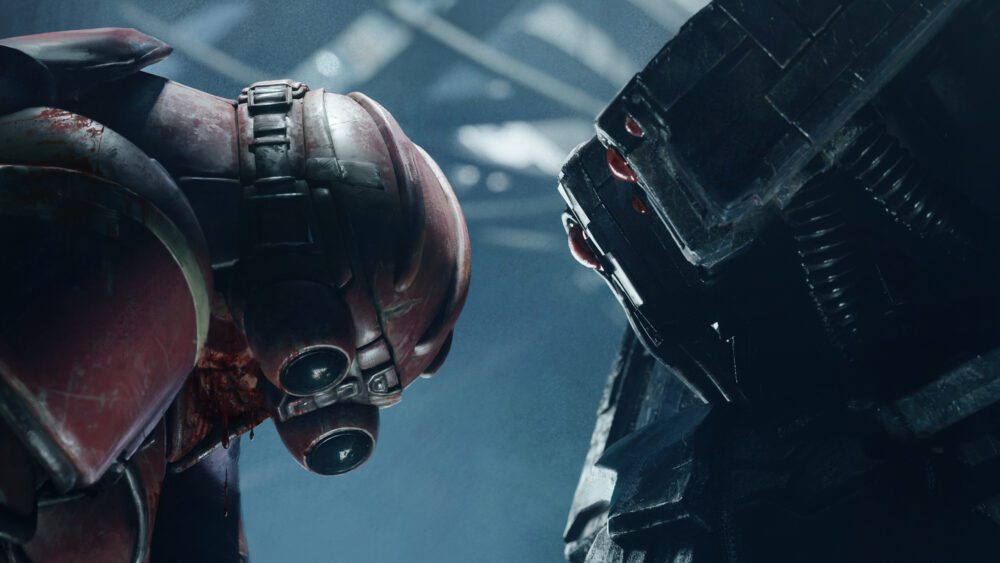
The new prequel, HUXLEY: The Oracle, is much more of a serious war story set years before the original graphic novel, focusing on the character Max, earlier in his life as he joins the army. I wanted to dive deeper into the Ronin soldier culture, how humanity is born, trained, and lives in the backdrop of this machine empire led by the Oracles at the height of their power in the future. The artwork for this is much more like film or game production illustrations, and the new format is more in the vein of an illustrated story book, similar to ‘Simon Stalenhag’ style format. This book acts almost like ‘DUNE Part 1’. The next book will be sort of like ‘DUNE Part 2’ and conclude the larger narrative that began in Oracle. We just handed off the draft of this book to the publisher over Christmas, excited to see that one out the door. It’s going to be a pretty epic conclusion and connect to the start of the original graphic novel in a cool way.
MFR: It’s fitting that publisher Read Only Memory is best known for their large hardcover books breaking down technology in an artistic manner, as it seems to suit Huxley perfectly. How did your relationship with ROM develop, and how have they contributed to the vision you have for Huxley?
MAURO: My relationship with Read-Only Memory developed very organically. I was searching for the
right publisher for quite some time, talking to many companies and exploring even self-
publishing/manufacturing at one point. I had a friend, Liam Wong, whose amazing photography books ‘AFTER DARK’ (among others) were published by them, and I was really impressed by the quality and the distribution reach they had. I would see his book everywhere, and he helped connect me with their team. They understood HUXLEY immediately, not just as a story but its worldbuilding and long-term scope, which I was creating. Their background in creating books that treat technology, games, and culture with respect and depth aligned perfectly with what I wanted HUXLEY to be.
ROM and Thames & Hudson have been instrumental in raising the project’s standards,
especially in terms of physical quality, presentation, and distribution, ensuring that books reach bookstores worldwide. They treat the books as something special and important. That mindset has influenced how I think about HUXLEY overall, as something meant to last, to be revisited, and to feel substantial in your hands that you will hopefully enjoy for many years to come on your shelves and in your book collections.
MFR: For those who don’t know, you’ve worked on films such as Neil Blomkamp’s Elysium and Peter Jackson’s The Hobbit trilogy, as well as on video game franchises like Call of Duty and Halo. Were there any lessons or ideas you gained from working on these other projects and how have they contributed to your approach to Huxley?
MAURO: I think it helped me understand the scale and scope of something like a AAA movie or game and just how long it takes. When you are starting out, it can be a little hard to understand, but after going through a movie like ELYSIUM from start to finish over nearly 4 years, it really helped me pace myself, understand the different phases of production, and just have a lot of patience to complete something. How to take an idea from a couple of words on a page, to a script, to ground up worldbuilding for a completely new IP, illustrate all the story moments, have everything get built practically to go on set, vfx production, and see the final film in the theatre…
it’s quite an experience.
With HUXLEY, I apply the same discipline to my own world and story. After spending years
working on other people’s films and adapting other works, when it came time to adapt my story for trailers and cinematic content, it was much more straightforward. On a deeper level, I think all those early experiences just gave me the confidence to do this for myself. I really wanted to see how the best people in the world made films, games, and told stories before I felt comfortable doing it for myself.
MFR: What are some of the biggest influences that have contributed to your work on Huxley?
MAURO: HUXLEY is influenced by a mix of classic science fiction, history, and real-world technological advancements. There is a lot of influence from Euro artists and graphic novelists like Moebius, Juan Giménez, and Japanese manga and anime artists like Katsuhiro Otomo, Masamune Shiro, and Hayao Miyazaki, mixed together with American action and sci-fi films. Writers and filmmakers like James Cameron were early inspirations, especially in how they treat worldbuilding as something lived-in rather than explained. Aside from that, a huge influence on Huxley is my life experiences, going into the characters and stories. There’s a lot of myself in the different characters, good and bad. A lot of the moments in the books are drawn from my life experiences, where possible, to tell a more personal story.
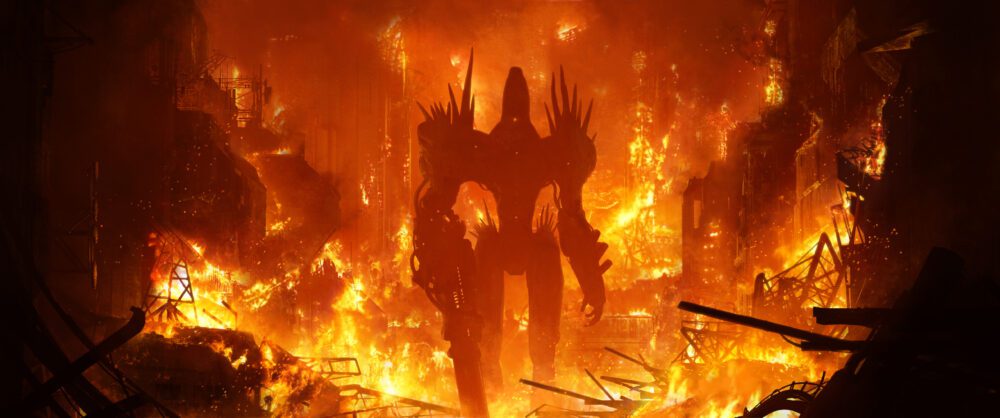
MFR: Huxley is clearly an ongoing project spanning multiple mediums, now including a traditional graphic novel, an illustrated book, and even short (and incredibly well-animated) videos. Do you plan on returning to the print medium with this universe next, or are you looking at other storytelling mediums for your next chapter?
MAURO: Print will always be a core pillar of HUXLEY. There are stories that simply work best on the page, and the physical books are an important part of the universe’s identity as it shows up in bookstores worldwide. The next book in the series will conclude the larger Oracle story and was handed off to the publisher over the holidays. I am excited to see when that heads out into the world. The next book is the final story in the first HUXLEY trilogy, another prequel set even earlier, when Max and some of the other Ronin are teenagers. More of a YA-type story that I think people will enjoy, helping show humanity’s full life cycle in this universe: how they are born into the world, the trials and hardships they must go through to survive, before they are able to join the army and become Ronin in Machine City. I am still figuring out whether this last story will follow a similar narrative format to Oracle or something new.
The short animated pieces have been a great way to prove out how the IP looks in film and
game form, and to show how it can be adapted, which has been very cool to see audiences’
responses to over the years. I am very interested in continuing to expand HUXLEY across other media and franchise pillars. I am also interested in a more traditional novel for sci-fi fans who prefer classic storytelling, along with a new storyline that fits more with a traditional Japanese Manga series format.
Be sure to check out Huxley and Huxley: The Oracle, available in bookstores now!
